John Riley overviews the various types of modern era Pentax lenses, including explaining crop sensors versus full-frame coverage. We then list all the DA, DA L and D-FA lenses produced with links to galleries and reviews.
Posted: 08/07/2025 - 10:08
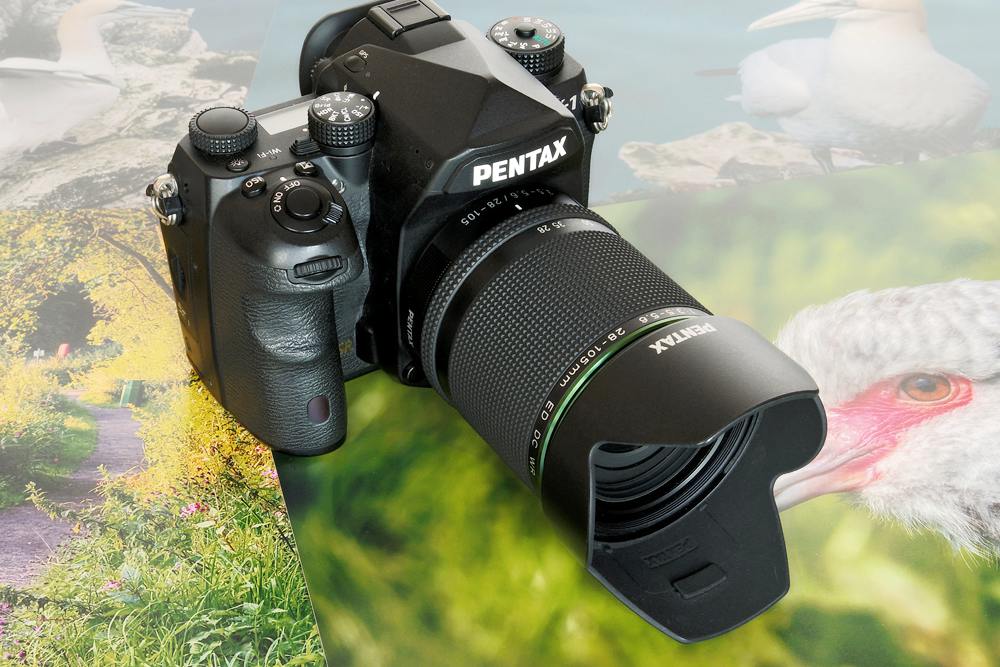
When the first DSLRs arrived, the market settled on using crop sesors, usually APS-C format. The reasons were mostly technical, the failure rate when producing smaller sensors being much lower than the more difficult to produce 35mm-format "full frame" sensors. There was also the cost factor, so APS-C was where we started and where many cameras still are today.
With the use of APS-C we also needed smaller lenses that were designed for that format. Although exisiting 35mm-format lenses could still be used, they covered far more than the sensor and were correspondingly large. Advantage could be taken of the smaller format to produce smaller lenses. However, as the smaller sensor only uses part of the image circle of a 35mm-format lens, there is a change in the field of view. This needed a simple way to get across what the new, DA small format lenses would cover, and in a more general sense in a world where several sensor sizes were being used, a way to unify the way field of view was expressed.
Despite several attempts over the years, the idea of actually using the field of view of a lens to describe its properties never caught on, and photographers just learned that, say, a 28mm lens was a wide angle. The problem with digital formats is that, for APS-C, the "crop factor" is applied and a 28mm lens is no longer a wide angle, but a 42mm "35mm equivalent" in terms of its field of view, which is a slightly wide standard lens. This can become more complicated if we also consider depth of field, as despite the change in field of view the 28mm lens remains in every respect a 28mm lens, with its attendant DOF characteristics. So we end up with a wide standard lens with increased DOF, and this roughly means that a APS-C crop sensor camera will have greater DOF than a 35mm-format full frame one. Pentax quote 1 stop difference, so anyone who routinely shoots at f/8 on full frame could shoot at f/5.6 on crop frame to end up with a similar DOF result.
Please bear in mind that these comments are an approximation and "rules of thumb" that will give us the desired result for most photography, but the principles might break down in some specific circumstances such as high magnification macro work.
To summarise the effect in terms of a "standard" lens, one that shows an effect similar to that of the human eye, this means that the standard 50mm lens as used on a full frame camera should be swapped for a 35mm lens for a similar effect when using a crop sensor. The same aplies to zoom lenses and the 18-55mm lenses supplied as standard on many crop sensor DSLRs show a "35mm equivalent" similar to using a 27-82.5mm lens on full frame. Rounding these figures, we would think of it being the equivalent of the ubiquitous 28-80mm lens that was used for many years on full frame film SLR cameras.
Pentax have always had an excellent history of backwards compatibility, so there are many full frame film-era lenses that can be used very satisfactorily on DSLRs. Some may show some weakness in terms of CA (chromatic abberation) and some wide angles in particular may perform relatively weakly at the edges. Much of this is due to the older lenses not being telecentric in design. Each pixel is housed in a slight pit on the sensor surface, so ideally the light rays exiting the back of the lens should fall parallel and therefore straight into these pits, rather than being oblique and catching the pixels edge on. This is not a problem with film, with its flat surface, but can be with a digital sensor. This depends on the original lens design and of course some corrections can be made in software, but digital-design lenses can perform better with DSLRs, especially when looking at the wide angle range.
The Film Era Lenses
The excellent backward-compatibility of the Pentax system over the years means that almost all Pentax lenses can be used on the Pentax DSLR range, including the original K Series and M Series. Obviously manual focus lenses will always be manual focus, but even in this case many lenses can be turned into AF ones by using the 1.7x AF converter.
There are some limitations in the way older lenses work and this has been detailed in previous lens overviews, but for the greatest convenience lenses from the A series onwards, with an A setting on the aperture ring, can be used to their full potential. Some of thse lenses remain excellent and there are some where newer designs are more desirable.
Now let's look at the lenses specifically designed with DSLRs in mind.
The DA Series Lenses
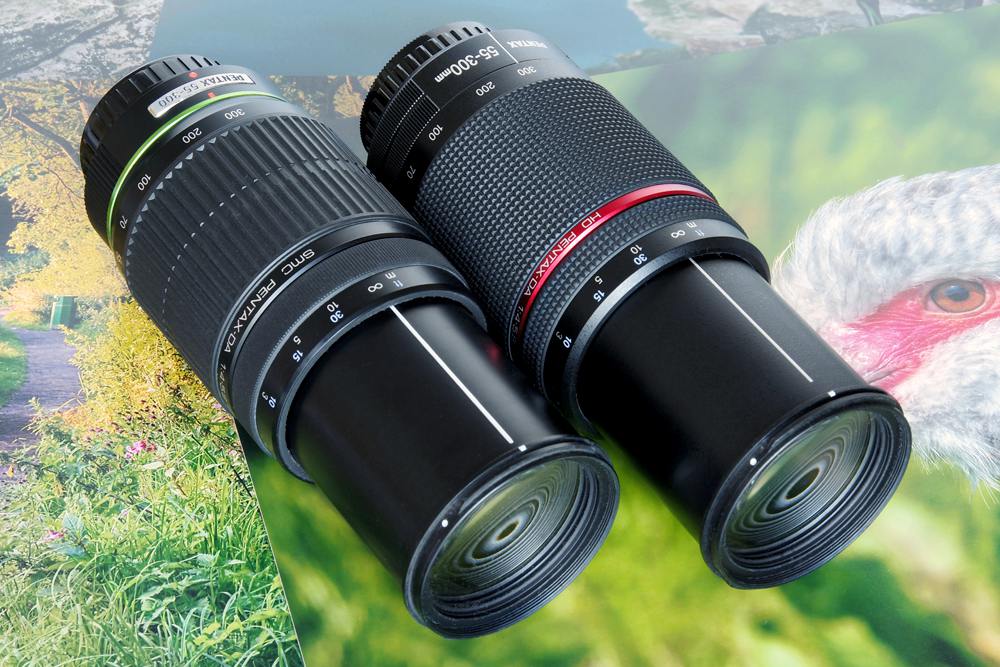
When thinking of the digital lenses, that is those specifically designed with DSLRs in mind, we start with the original DA series. These are designated SMC Pentax-DA and more recently HD Pentax-DA. SMC refers to the well known Super-Multi-Coating that was introduced in the early 1970s, but which will have developed constantly over the years. The SMC coating reduces flare, increases contrast and is consistent in terms of image tone across the range. The newer HD coating uses nano technology to reduce the amount of flare even further, perhaps by as much as 50%, although there are some who prefer the flare patterns that can sometimes be generated with SMC lenses. This particularly applies to star effects around bright light sources. For this reason, the full frame 50mm f/1.4 lens is offered as an HD optic or as an SMC "Classic" version.
DA lenses are crop sensor, but it is worth experimenting as it may be possible to use some lenses on full frame cameras perhaps at some apertures, perhaps all apertures, with minimal reduction in edge quality.
There are other features that have gradually been introduced such as WR (Weather resistance), AW (All Weather use) and SP (Super Protect) coating on the front element to repel water, dust and dirt. Quick Shift can be a huge advantage, enabling the final focusing position to be manually tweaked after AF has locked on. This means it is not necessary to switch on MF when looking for precision focus on a particular spot, especially in Macro work. Not all lenses have Quick Shift, so it is important to avoid trying to force MF when using AF on a lens that does not support this feature.
The virtually 100% compatibility of all lenses with all cameras no longer holds true with all lenses, starting with the SMC Pentax-DA 17-70mm f/4 AL [IF] SDM that is exclusively for use on SDM-compatible camera bodies. There is no screw drive for AF, so if a camera is not SDM-compatible then only manual focus will be possible. For some very recent lenses, in addition the diaphragm is driven electronically so needs a camera body that can support this feature. Other bodies will not be able to stop down the lens so will always operate at open aperture. The reason for this is technological progress and the need for very fast, silent and accurate aperture setting for use with high frame rates and video shooting.
| SMC Pentax-DA & HD Pentax-DA Prime Lenses | |||||
| Specification | Elements/Groups | Min Focus | Filter | Weight | Magnification |
|---|---|---|---|---|---|
|
14mm f/2.8 ED [IF]
|
12/11 | 17cm | 77mm | 420g | 0.91x |
|
15mm f/4 ED AL Limited
|
8/6 | 18cm | 49mm | 190g | 0.15x |
|
HD 15mm f/4 ED AL Limited
|
8/6 | 18cm | 49mm | 190g | 0.15x |
|
21mm f/3.2 AL Limited
|
8/5 | 20cm | 49mm | 43mm on hood | 155g inc hood | 0.17x |
|
HD 21mm f/3.2 AL Limited
|
8/5 | 20cm | 49mm |43mm on hood | 149g inc hood | 0.17x |
|
35mm f/2.4 AL
|
6/5 | 30cm | 49mm | 124g | 0.17x |
|
35mm f/2.8 Macro Limited
|
9/8 | 14cm | 49mm | 215g | 1.0x |
|
HD 35mm f/2.8 Macro Limited
|
9/8 | 14cm | 49mm | 215g | 1.0x |
|
40mm f/2.8 Limited
|
5/4 | 40cm | 49mm | 30.5mm on hood | 90g | 0.17x |
|
HD 40mm f/2.8 Limited
|
5/4 | 40cm | 49mm | 30.5mm on hood | 89g | 0.17x |
|
50mm f/1.8
|
6/5 | 45cm | 49mm | 122g | 0.15x |
|
*55mm f/1.4 SDM
|
9/8 | 45cm | 58mm | 375g | 0.17x |
|
70mm f/2.4 Limited
|
6/5 | 70cm | 49mm | 130g | 0.12x |
|
HD 70mm f/2.4 Limited
|
6/5 | 70cm | 49mm | 130g | 0.12x |
|
*200mm f/2.8 ED [IF] SDM
|
9/8 | 120cm | 77mm | 825g | 0.20x |
|
*300mm f/4 ED [IF] SDM
|
8/6 | 140cm | 77mm | 1240g inc hood and tripod foot | 0.24x |
|
560mm f/5.6 ED AW
|
7/6 | 560cm | 112mm front | 40.5mm rear | 3286g inc hood | 0.10x |
| SMC Pentax-DA & HD Pentax-DA Zoom Lenses | |||||
| Specification | Elements/Groups | Min Focus | Filter | Weight | Magnification |
|---|---|---|---|---|---|
|
10-17mm f/3.5-4.5 ED [IF] Fish-eye
|
10/8 | 14cm | No filter thread | 320g | 0.39x |
|
HD 10-17mm f/3.5-4.5 ED [IF] Fish-eye
|
10/8 | 14cm | No filter thread | 323g inc hood | 0.39x |
|
HD *11-18mm f/2.8 ED DC AW
|
16/11 | 30cm | 82mm | 739g inc hood | 0.10x |
|
12-24mm f/4 ED AL [IF]
|
13/11 | 30cm | 77mm | 430g | 0.12x |
|
16-45mm f/4 ED AL
|
13/10 | 28cm | 67mm | 365g | 0.26x |
|
*16-50mm f/2.8 ED AL [IF] SDM
|
15/12 | 30cm | 77mm | 565g | 0.21x |
|
HD *16-50mm f/2.8 ED PLM AW
|
16/10 | 30cm | 77mm | 750g inc hood | 0.24x |
|
HD 16-85mm f/3.5-5.6 ED DC WR
|
16/12 | 35cm | 72mm | 488g | 0.26x |
|
17-70mm f/4 AL [IF] SDM
|
17/12 | 28cm | 67mm | 485g | 0.31x |
|
HD 18-50mm f/4-5.6 DC WR RE
|
11/8 | 30cm | 58mm | 158g | 0.23x |
|
18-55mm f/3.5-5.6 AL
|
12/9 | 25cm | 52mm | 225g | 0.34x |
|
18-55mm f/3.5-5.6 AL II
|
11/8 | 25cm | 52mm | 220g | 0.34x |
|
18-55mm f/3.5-5.6 AL WR
|
11/8 | 25cm | 52mm | 230g | 0.34x |
|
18-135mm f/3.5-5.6 ED AL [IF] DC WR
|
13/11 | 40cm | 62mm | 405g | 0.24x |
|
18-250mm f/3.5-6.3 ED AL [IF]
|
16/13 | 45cm | 62mm | 455g | 0.28x |
|
18-270mm f/3.5-6.3 ED SDM
|
16/13 | 49cm | 62mm | 453g | 0.26x |
|
HD 20-40mm f/2.8-4 ED DC WR Limited
|
9/8 | 28cm | 55mm | 283g | 0.20x |
|
*50-135mm f/2.8 ED [IF] SDM
|
18/14 | 100cm | 67mm | 685g | 0.17x |
|
50-200mm f/4-5.6 ED
|
11/10 | 110cm | 52mm | 255g | 0.24x |
|
50-200mm f/4-5.6 ED WR
|
11/10 | 110cm | 49mm | 285g | 0.24x |
|
55-300mm f/4-5.8 ED
|
12/8 | 140cm | 58mm | 440g | 0.28x |
|
HD 55-300mm f/4-5.8 WR
|
12/8 | 140cm | 58mm | 450g | 0.28x |
|
HD 55-300mm f/4.5-6.3 ED PLM WR RE
|
14/11 | 95cm | 58mm | 442g | 0.30x |
|
*60-250mm f/4 ED [IF] SDM
|
15/13 | 110cm | 67mm | 1050g | 0.15x |
| HD Pentax-DA Rear Converters | |||||
| Specification | Elements/Groups | Min Focus | Filter | Weight | Magnification |
|---|---|---|---|---|---|
|
HD 1.4x AW AF Rear Converter
|
4/3 | N/A | N/A | 126g | 1.4x |
The DA L and XS Lenses
There are a few L designated lenses that are primarily what would be termed "kit lenses" and are sold in kits along with the lower priced camera bodies. They are usually identical in terms of optics, but are lighter and do without weather sealing or Quick Shift focusing. They may also have plastic lens mounts instead of the usual metal and will not have the lens hoods as provided with the standard versions. Performance is above average compared to the kit lenses provided by other manufacturers.
The other oddity is the SMC Pentax-DA 40mm f/2.8 XS, which is a very tiny version of the mainstream lens, designed especially by Marc Newson and intended to match the Pentax K-01 camera. This tiny lens performs just as well as its sibling and can be used equally well on any of the DSLRs.
| SMC Pentax-DAL Zoom Lenses | |||||
| Specification | Elements/Groups | Min Focus | Filter | Weight | Magnification |
|---|---|---|---|---|---|
|
L 18-50mm f/4-5.6 DC WR RE
|
11/8 | 30cm | 58mm | 158g | 0.23x |
|
L 18-55mm f/3.5-5.6 AL
|
11/8 | 25cm | 52mm | 200g | 0.34x |
|
L 18-55mm f/3.5-5.6 AL WR
|
11/8 | 25cm | 52mm | 200g | 0.34x |
|
L 50-200mm f/4-5.6 ED
|
11/10 | 110cm | 52mm | 235g | 0.24x |
|
L 50-200mm f/4-5.6 ED WR
|
11/10 | 110cm | 49mm | 235g | 0.24x |
|
L 55-300mm f/4-5.8 ED
|
12/8 | 140cm | 58mm | 425g | 0.28x |
| SMC Pentax-DA XS Lens | |||||
| Specification | Elements/Groups | Min Focus | Filter | Weight | Magnification |
|---|---|---|---|---|---|
|
40mm f/2.8 XS
|
5/4 | 40cm | 27mm | 52g | 0.13x |
The D FA Full Frame Lenses
The advent of the K-1 full frame DSLR required a set of full frame digital lenses from the outset, and these are still in production for the K-1 and K-1 II cameras. They can equally well be used on the crop sensor bodies, although they are large and heavy which may negate some of the benefit of using the smaller format.
| SMC Pentax-D FA & HD Pentax-D FA Full Frame Prime Lenses | |||||
| Specification | Elements/Groups | Min Focus | Filter | Weight | Magnification |
|---|---|---|---|---|---|
|
HD 21mm f/2.4 ED DC WR Limited
|
11/8 | 18cm | 67mm | 416g | 0.26x |
|
HD *50mm f/1.4 SDM AW
|
15/9 | 40cm | 72mm | 955g inc hood | 0.18x |
|
50mm f/2.8 Macro
|
8/7 | 20cm | 49mm | 265g | 1.0x |
|
HD *85mm f/1.4 SDM AW
|
12/10 | 85cm | 82mm | 1355g inc hood | 0.12x |
|
100mm f/2.8 Macro
|
9/8 | 30cm | 49mm | 345g | 1.0x |
|
100mm f/2.8 Macro WR
|
9/8 | 30cm | 49mm | 345g | 1.0x |
|
HD 100mm f/2.8 ED AW Macro
|
10/8 | 30cm | 49mm | 348g | 1.0x |
| HD Pentax-D FA Full Frame Zoom Lenses | |||||
| Specification | Elements/Groups | Min Focus | Filter | Weight | Magnification |
|---|---|---|---|---|---|
|
HD 15-30mm f/2.8 ED SDM WR
|
18/13 | 28cm | No filter thread | 1040g | 0.20x |
|
HD 24-70mm f/2.8 ED SDM WR
|
17/12 | 38cm | 82mm | 787g | 0.20x |
|
HD 28-105mm f/3.5-5.6 ED DC WR
|
15/11 | 50cm | 62mm | 464g inc hood | 0.22x |
|
HD *70-200mm f/2.8 ED DC AW
|
19/16 | 120cm | 77mm | 2026g inc hood and tripod foot | 0.13x |
|
HD 70-210mm f/4 ED SDM WR
|
20/14 | 95cm | 67mm | 859g inc hood | 0.32x |
|
HD 150-450mm f/4.5-5.6 ED DC AW
|
18/14 | 200cm | 86mm | 2325g inc hood and tripod foot | 0.22x |
Glossary
There are plenty of potentially confusing terms used in photography, and plenty more when it comes to digital lenses. A summary of the main terms used with the lenses covered in this article follows, and any clarification can be expanded in the forums or by posting a comment below.
Super-Multi-Coating or SMC - The original Pentax 7-layer coating introduced in 1972. Conventional coating may consist of just one or two layers so SMC was a huge advance. Reflections and flare are vastly reduced.
HD - HD coating is the latest Pentax multi-coating technology and redces flare and artefacts to around half the amount remaining when SMC coating is used. It also reduces the pointed star effects, so in some cases users may seek out the SMC version for creative reasons.
SP - Super-protect is a Fluoride coating that is applied to the front element to resist contamination by water, dust and oil. SP also makes the front element much easier to clean.
QS - Quick Shift is a clutch mechanism that allows a final tweak to be made manually when the AF has locked on. There is no need to select MF on any switch to achieve this. This is particularly useful in Macro photography. Not all lenses have this feature, so those that do not should not be forced and will need switching to MF separately.
WR - Weather Resistance is almost obligitory these days and enables lenses and cameras to be used out in the field in light rain and other inclement weather. However, the designation is rarely specific, so it is worth bearing in mind that WR does not mean waterproof and sensible precautions should be taken. For example, when using zoom lenses this writer will wipe the lens barrel as dry as possible before allowing such a lens when extended to draw water back into the lens body when closing it down. There is no point pushing our luck. Having said that, many years of using lenses in the rain has so far not caused any damage.
AW - All Weather performace seems to suggest that this is an enhanced form of WR, which is reassuring, but again the actual performance is not specified in detail. With reasonable care, so far even heavy rain has not proved to be a problem.
AF - Auto focus is well established and the conventional system is to have a motor in the camera body and a screw drive to the lens to achieve focus. This can be blisteringly fast with small lenses such as the 40mm f/2.8 or relatively sedate if a large amount of glass is having to be shifted. Focusing will be noisy.
SDM - Supersonic Direct-drive Motor. Quiet focusing, faster focusing but early on some problems with reliability. Like all things, SDM has evolved with the use of smaller, better motors. As the motors are now built into the lens, leneses will be larger and perhaps more expensive, but current SDM offers a superior performance with AF and driving the aperture mechanism but will need SDM-compatible bodies where no screw drive alternative is built in.
DC - DC motors are more suitable for some lenses and are used instead of SDM where it is more appropriate. They are quiet and fast and have a high degree of accuracy.
AL - Aspherical lens elements are used. Conventional lens elements have spherical surfaces, meaning that many elements can be needed to correct the various abberations. Variable surface shapes (aspherical) can reduce the number of elements needed, enable faster lenses and perhaps increase edge to edge quality. This can be done using glass, but the process is very expensive, time consuming and difficult. As an alternative, hybrid elements may be used where plastic of the desired shape is bonded to a glass element. This brings AL technology into the scope of even the humble kit lens.
ED - Extra Low Dispersion. Glass elements split light into its component colours, just like a prism. More elements are needed to counteract this effect. However, new glass types can reduce this dispersion of light and make the elimination of CA (Chromatic Abberation) or colour fringing easier to correct.
IF - Inner Focusing. Instead of the lens extending when focused closer, the focusing is effected by moving internal elements or groups of elements. The advantage is the lens retains its balance, the front element does not rotate this making filter use easier and focusing can be quieter and faster. Using IF may have effects on the actual focal length as we focus, but this is largely academic for normal use.
Lens Hoods - To reduce flare to the absolute minimum, increase contrast and protect the front of the lens from impact damage the use of a lens hood is the answer. Pentax provide lens hoods with most of the range, and most are convenient bayonet fits. Most of the bayonet hoods have a small removable slot and this is provided so that polarising filters can be used and rotated without having to remove the hood. Limited lenses have very compact and ingenious lens hoods that have built in lens caps.
Related Articles
- Pentax K Series - The Original K Mount
- Pentax M Series - The Compact SLR
- Pentax A Series - The Arrival of the KA Mount
- Pentax F Series - Introduction of Auto Focus
- Pentax FA Series Lenses
Add Comment
To leave a comment - Log in to Pentax User or create a new account.