Continuing our journey exploring the various series from Pentax, John Riley reaches the FA & FA J Series of lenses. John looks into the history of these full-frame offerings of which include some still in production to this day, along with a few other models that have been modernised.
Posted: 18/12/2024 - 15:22
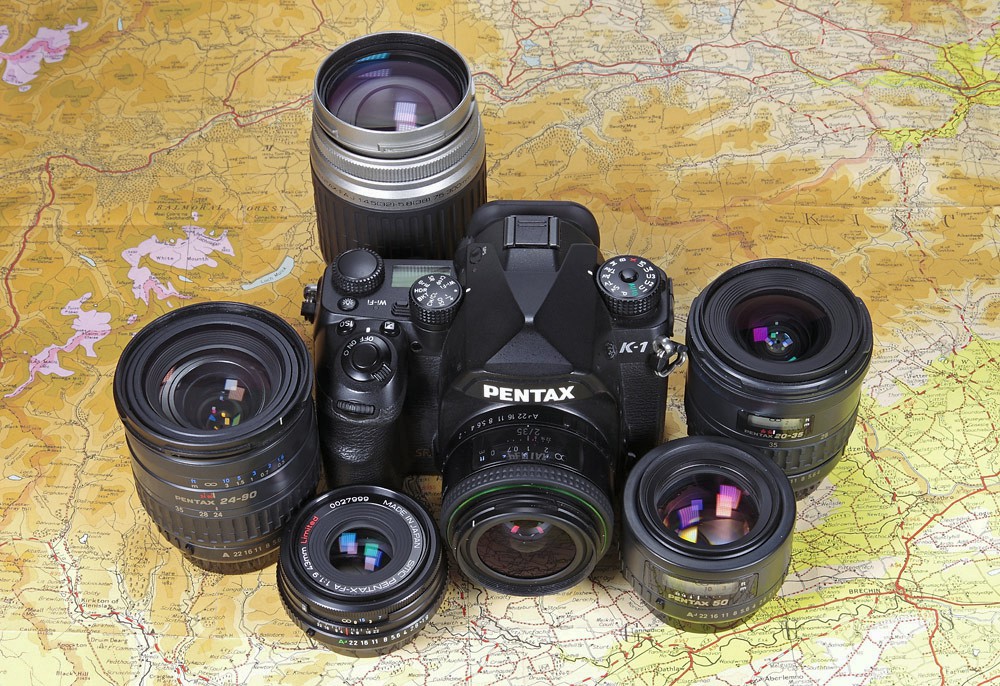
The FA lenses are of particular interest to users of DSLRs as they are all full frame, all fully functional on our digital cameras and very often offer excellent performance as well. Some are even still in production. Let's have a more detailed look at these film-era lenses that have proven their worth even when pitched up against the latest digital optics. They also have a few tricks up their sleeves that have been lost or modified on current cameras.
The FA Series Lenses
The tables listing the FA series lenses show that lens development was really taking shape, as the day of the zoom lens took a relentless hold. Even so, the ubiquitous 35mm and 50mm lenses survive in the centre of this maelstrom. Specification leaflets still list various parameters quoting figures obtained when using a 50mm standard lens.
All the FA series are full frame lenses. They all have the electronic contacts to relay information to the camera, and this includes MTF so the optimum aperture of a lens can be known. All the FA lenses can still be used on crop sensor bodies, in which case the "crop factor" will indicate the new equivalent focal length to give us an idea of what the field of view will be.

So, for example, the standard lens for a crop sensor camera would be around 35mm and for a full frame camera around 50mm. The standard lens for any given format is considered to be the diagonal measurement of that format, so for full frame that is actually 43mm. Accordingly, Pentax provide a 43mm lens, one of the very few manufacturers to ever do so as an interchangeable lens for SLR or DSLR. Many compact cameras over the years have been provided with fixed lenses from 35mm to 45mm. The SLR design has to account for the space needed for the flipping mirror, so a slightly longer focal length is easier to design with wider apertures.
A few of the longer lenses will have two filter sizes listed. For example, the SMC Pentax-FA* 250-600mm f/5.6 ED [IF] Power Zoom has a front filter size of 112mm, but also a rear filter holder that takes a 43mm filter. This rear filter should always be in place, even if just a clear glass, as it is part of the optical design of the lens.
| SMC & HD Pentax-FA Prime Lenses | |||||
| Specification | Elements/Groups | Min Focus | Filter Size | Weight | Magnification |
|---|---|---|---|---|---|
| Wide Angle | |||||
| 20mm f/2.8 | 10/9 | 0.25m | 67mm | 255g | 0.12x |
| *24mm f/ AL [IF] | 11/9 | 0.3m | 67mm | 405g | 0.12x |
| 28mm f/2.8 AL | 5/5 | 0.3m | 49mm | 185g | 0.12x |
| 28mm f/2.8 Soft | 5/5 | 0.3m | 49mm | 195g | 0.13x |
| HD 31mm f/1.8 Limited | 9/7 | 0.3m | 58mm | 341g | 0.16x |
| 31mm f/1.8 AL Limited | 9/7 | 0.3m | 58mm | 345g | 0.16x |
| HD 35mm f/2 | 6/5 | 0.3m | 49mm | 193g | 0.17x |
| 35mm f/2 AL | 6/5 | 0.3m | 49mm | 195g | 0.17x |
| Standard | |||||
| HD 43mm f/1.9 Limited | 7/6 | 0.45m | 49mm | 155g | 0.12x |
| 43mm f/1.9 Limited | 7/6 | 0.45m | 49mm | 155g | 0.12x |
| HD 50mm f/1.4 | 7/6 | 0.45m | 49mm | 223g | 0.15x |
| 50mm f/1.4 Classic | 7/6 | 0.45m | 49mm | 216g | 0.15x |
| 50mm f/1.4 | 7/6 | 0.45m | 49mm | 220g | 0.15x |
| 50mm f/1.7 | 6/5 | 0.45m | 49mm | 170g | 0.15x |
| 50mm f/2.8 Macro | 8/7 | 0.19m | 52mm | 385g | 1.0x |
| Telephoto | |||||
| HD 77mm f/1.8 Limited | 7/6 | 0.7m | 49mm | 270g | 0.14x |
| 77mm f/1.8 Limited | 7/6 | 0.7m | 49mm | 270g | 0.14x |
| *85mm f/1.4 [IF] | 8/7 | 0.85m | 67mm | 550g | 0.11x |
| 85mm f/2.8 SOFT | 5/4 | 0.5m | 52mm | 305g | 0.23x |
| 100mm f/2.8 Macro | 9/8 | 0.31m | 58mm | 600g | 1.0x |
| 100mm f/3.5 Macro | 5/4 | 0.43m | 49mm | 220g | 0.5x |
| 135mm f/2.8 [IF] | 8/7 | 0.7m | 52mm | 220g | 0.25x |
| Long Telephoto | |||||
| *200mm f/2.8 ED [IF] | 9/8 | 1.2m | 77mm | 785g | 0.20x |
| *200mm f/4 Macro ED [IF] | 12/9 | 0.51m | 67mm | 1080g | 1.0x |
| *300mm f/2.8 ED [IF] | 10/7 | 2m | 112mm and 43mm | 2765g | 0.17x |
| *300mm f/4.5 ED [IF] | 9/7 | 2m | 67mm | 935g | 0.17x |
| *400mm f/5.6 ED [IF] | 9/8 | 2m | 77mm | 1140g | 0.23x |
| *600mm f/4 ED [IF] | 9/7 | 5m | 150mm and 43mm | 6830g | 0.13x |
This leads us nicely to the party trick of some seven FA lenses, that is, Power Zoom. In the DSLR Power Zoom lenses will still operate as such, but the other functions will not. Originally Power Zoom had its own special functions on compatible film bodies such as the Z-1. These cameras will be covered in detail in another article.
Power Zoom
There are seven Power Zoom lenses, indicated in the listings as PZ. In its basic form, motors within the lens operate the zooming mechanism, the further the zoom ring being turned then the faster the zoom. This feature is way ahead of its time and even today is only just being picked up with a few lenses from a few manufacturers.
To activate Power Zoom, the zoom ring is pushed forwards, to use manual zoom it is pulled back. The zooming action using power is smooth and quite controllable, although it can be quite noisy and would be very unsuitable for use during videography.
There is a switch on the side of the Power Zoom lenses that controls three special functions. The first is "Image-size tracking" that uses PZ to keep a subject the same size in the frame regardless of distance. The second is "Zoom clip" to instantly return to a preset focal length from any other setting. The third is "Zoom effect" to create dramatic streaking effects. The special functions will not operate with DSLRs. When buying used lenses it is as well to check that the switch is intact as it is relatively vulnerable to damage.
| SMC Pentax-FA Zoom Lenses | |||||
| Specification | Elements/Groups | Min Focus | Filter Size | Weight | Magnification |
|---|---|---|---|---|---|
| FA Zoom Lenses | |||||
| 20-35mm f/4 AL | 10/8 | 0.33m | 58mm | 245g | 0.16x |
| 24-90mm f/3.5-4.5 AL [IF] | 13/11 | 0.5m | 67mm | 355g | 0.18x |
| *28-70mm f/2.8 AL PZ | 14/11 | 0.43m | 67mm | 800g | 0.25x |
| 28-70mm f/4 AL | 9/7 | 0.4m | 52mm | 240g | 0.23x |
| 28-80mm f/3.5-4.7 PZ | 8/8 | 0.4m | 380mm | 380g | 0.25x |
| 28-80mm f/3.5-5.6 | 8/8 | 0.5m | 58mm | 278g | 0.19x |
| 28-80mm f/3.5-5.6 AL | 7/7 | 0.7m | 58mm | 230g | 0.13x |
| 28-90mm f/3.5-5.6 | 10/8 | 0.4m | 58mm | 195g | 0.28x |
| 28-105mm f/3.2-4.5 AL [IF] | 12/11 | 0.5m | 49mm | 255g | 0.19x |
| 28-105mm f/4-5.6 PZ | 13/11 | 0.43m | 58mm | 515g | 0.33x |
| 28-105mm f/4-5.6 [IF] | 15/12 | 0.5m | 62mm | 305g | 0.18x |
| 28-200mm f/3.8-5.6 AL [IF] | 16/14 | 0.52m | 72mm | 465g | 0.23x |
| 35-80mm f/4.5-5.6 | 7/6 | 0.4m | 49mm | 160g | 0.25x |
| 70-200mm f/4-5.6 PZ | 10/8 | 1.1m | 49mm | 465g | 0.25x |
| *80-200mm f/2.8 ED [IF] PZ | 16/13 | 1.4m | 77mm | 1510g | 0.19x |
| 80-200mm f/4.7-5.6 | 11/7 | 1.1m | 49mm | 270g | 0.25x |
| 80-320mm f/4.5-5.6 | 13/10 | 1.5m | 58mm | 550g | 0.28x |
| 100-300mm f/4.5-5.6 PZ | 12/8 | 1.5m | 58mm | 605g | 0.25x |
| 100-300mm f/4.7-5.8 | 11/9 | 1.5m | 52mm | 390g | 0.26x |
| *250-600mm f/5.6 ED [IF] PZ | 18/16 | 3.5m | 112mm and 43mm | 5400g | 0.20x |
| FA J Zoom Lenses | |||||
| 18-35mm f/4-5.6 | 12/10 | 0.28m | 67mm | 203g | 0.18x |
| 28-80mm f/3.5-5.6 AL | 8/8 | 0.4m | 58mm | 180g | 0.25x |
| 75-300mm f/4.5-5.8 AL | 12/10 | 1.3m | 58mm | 385g | 0.30x |

Losses and Gains
The previous range of F series lenses were designed with "macro" settings for the closer focusing positions, but the FA series do away with this and the focusing is continuous from infinity right down to the closest point. This is a definite advantage, avoiding awkward distances where the standard and macro ranges meet. In general the FA zoom lenses focus much closer than the primes. Although not actually offering macro (1x magnification or 1:1) they do go down to around 0.25x, or 1:4, which is usefully close for general shooting.
The FA series also gain some high quality optics that are very usable even on the latest high resolution DSLRs. Apart from the Star lenses, there are the three original Limited lenses (31mm, 43mm, 77mm) that have an enviable reputation. The 28-70mm f/2.8 and 80-200mm f/2.8 Power Zoom Star lenses were released as a pair of high quality lenses, at prices considerably more expensive than the regular Pentax range. These and also the 200mm f/4 macro all have enviable reputations and even today will command accordingly high prices. Several lenses, including the Limited range, are being re-offered with the new HD coating and are still in production. The 50mm f/1.4 is currently available in two versions, the HD version for the latest "look" and best flare control to images, and an SMC version labelled Classic that offers dramatic and classic flare effects.
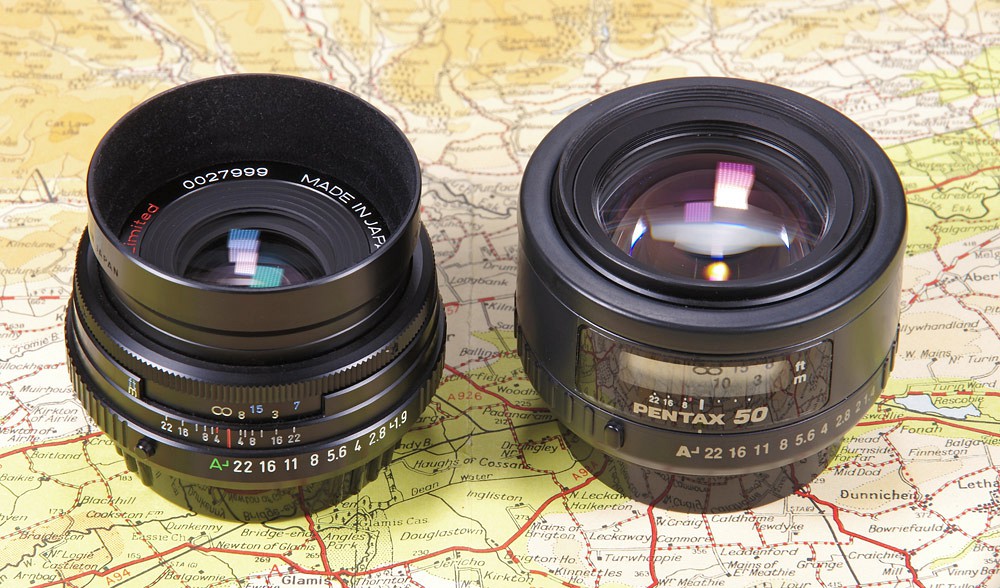
The three Limited lenses, 31mm, 43mm and 77mm, have been given a new lease of life with the new HD coatings and remain superb examples of the lens makers' art. When originally released, the 43mm was hailed as the first re-design of the standard lens for decades and one that could take on the Zeiss 50mm in the quality stakes. It was also made available in Leica M mount. We are in the territory here of lenses sprinkled with that magic pixie dust...
FA Series Lenses Currently in Production
- SMC Pentax-FA 50mm f/1.4 Classic
- HD Pentax-FA 31mm f/1.8 Limited
- HD Pentax-FA 35mm f/2
- HD Pentax-FA 43mm f/1.9 Limited
- HD Pentax-FA 50mm f/1.4
- HD Pentax-FA 77mm f/1.8 Limited
2003 brought the first digital SLR to the Pentax range, the *istD, a very expensive crop sensor camera. The FA J lenses, which, for the first time, had no aperture rings had already been introduced with the *ist film camera, so the stage was already set. The aperture being controlled by the camera was considered at the time a major step. These are also all Full Frame lenses and can be used on the current K-1 with good results. They may be very plastic in construction, but they perform well.
Many FA lenses can be quite happily used on the DSLRs. Some wide angles may suffer a bit at the edges as their designs will not be telecentric, resulting in the edge light waves hitting the sensor at oblique angles. This does not matter with the flat surface of film, but can interfere with the light reaching pixels that are in pits on the sensor surface. Telecentric lenses offer parrallel exit rays from the lens, avoiding any colour fringing problems. However, this is not a deal breaker for all the lenses and the 20-35mm and 24-90mm zoom lenses both perform very satisfactorily.
We do not have QuickShift on FA lenses and we do not have WR or AW dust and mositure resistance, these will be found on the Digital lenses described in a future article.
What we do have are huge numbers of excellent lens designs that can sit quite happily on our DSLR cameras and still offer many years of good service at mostly relatively modest cost. In testament to this is the fact that several of them are still in manufacture, equipped with new coatings and ready to take on the digital world.
Related Articles
- Pentax K Series - The Original K Mount
- Pentax M Series - The Compact SLR
- Pentax A Series - The Arrival of the KA Mount
- Pentax F Series - Introduction of Auto Focus
- Pentax Digital Lenses
Pentax FA Series Sample Photos





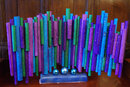




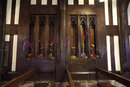

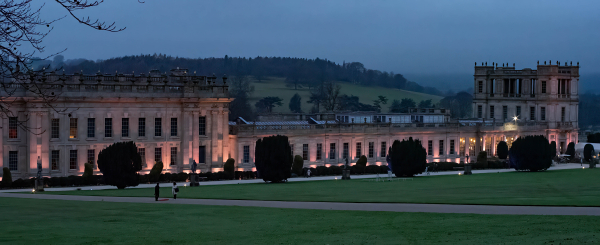
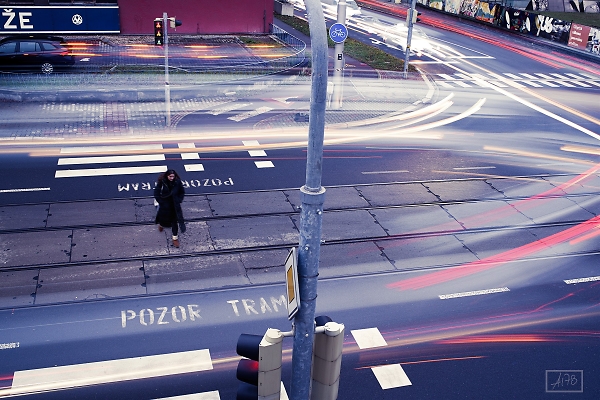
Members gallery photos using: HD PENTAX-FA 35mm F2








Add Comment
To leave a comment - Log in to Pentax User or create a new account.




1728 posts
20 years