Penny macro contest - revisited

Posted 14/02/2021 - 16:28
Link
As there appears to be some instances of deviation from the original rules I thought I'd add mine

Pentax K1 MkII + F 50mm f2.8 Macro

Pentax K1 MkII + F 50mm f2.8 Macro
LennyBloke

Posted 14/02/2021 - 16:55
Link
My attempt using the K70. Not really tried anything like this before but enjoyed the challenge.
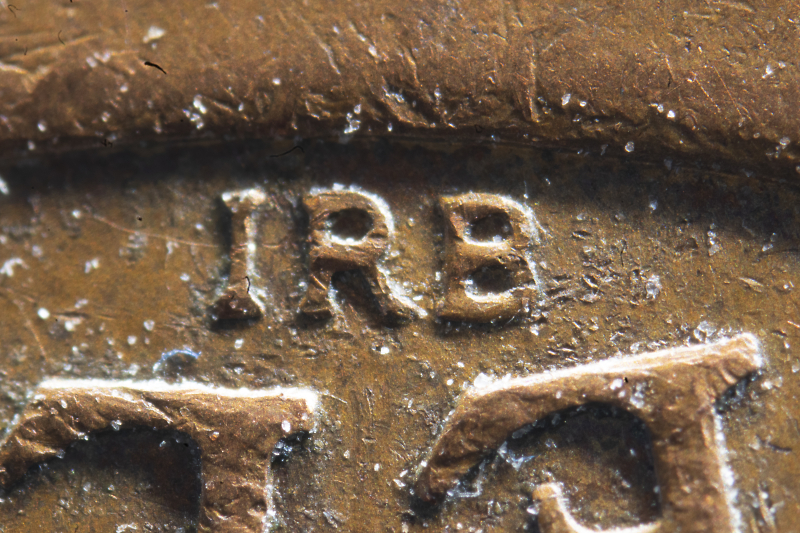
Used a Helicoid extension, M135 lens with a reversed M28mm lens. Using the helicoid made focussing easier, I had tried using bellows but very difficult to focus without a focussing rail.


Used a Helicoid extension, M135 lens with a reversed M28mm lens. Using the helicoid made focussing easier, I had tried using bellows but very difficult to focus without a focussing rail.

Paul
K1000, Espio 140, ist, istD, K70, K3iii and numerous lenses, just don't tell my wife.
K1000, Espio 140, ist, istD, K70, K3iii and numerous lenses, just don't tell my wife.

Posted 14/02/2021 - 20:31
Link
Anyone hazard a guess at what the white spots are on some of the coins? Dried skin. bacterial growth, something illegal ..... ????
Steve
Steve
Posted 14/02/2021 - 20:46
Link
Lubbyman wrote:
Found time to have a break from doing other things, so here as requested is a PP'd version of my first shot (F50mm f1.7 @ f11 reversed on DA*300mm).coker wrote:
Steve,how about giving it the full PP works & see how it comes up?
Depends on progress with domestic duties... Steve,how about giving it the full PP works & see how it comes up?

Steve

Posted 15/02/2021 - 01:53
Link
I made some space for a lot of kit this afternoon. Two tripods - one for the coin Blutacked onto the end of a BPM focus slider and one for the camera and it's accoutrements.
Attached to the K5 was a BPM bellows half extended sitting on top of a heavy cast iron Pentax focus slider (hefty great thing - I've never found another). A Takumar f4 200mm was attached to the bellows and a Takumar 28mm was reversed onto the end of it. Lighting was from an anglepoise lamp hard up against the target coin which was a brand new, shiny copper plated 2p. I couldn't find a penny so, as this is about the size of an old halfpenny, I deemed it a fair substitute. The engraver's initials were just below the Queen's bust, as normal. Shutter release was after mirror lock up and by IR remote.
The main problem at that magnification was navigating to find the target. After that focusing was done via the target's slider. Even with a shiny new coin that looks mirror finished, the surface texture and bits of this and that on it (or in it) are quite surprising. Anyway, here is my result. Looks like there is some shutter shake even with all the cast iron work put there to prevent it !

Attached to the K5 was a BPM bellows half extended sitting on top of a heavy cast iron Pentax focus slider (hefty great thing - I've never found another). A Takumar f4 200mm was attached to the bellows and a Takumar 28mm was reversed onto the end of it. Lighting was from an anglepoise lamp hard up against the target coin which was a brand new, shiny copper plated 2p. I couldn't find a penny so, as this is about the size of an old halfpenny, I deemed it a fair substitute. The engraver's initials were just below the Queen's bust, as normal. Shutter release was after mirror lock up and by IR remote.
The main problem at that magnification was navigating to find the target. After that focusing was done via the target's slider. Even with a shiny new coin that looks mirror finished, the surface texture and bits of this and that on it (or in it) are quite surprising. Anyway, here is my result. Looks like there is some shutter shake even with all the cast iron work put there to prevent it !

Posted 15/02/2021 - 15:32
Link
Well.
I thought I was losing it to be honest!
Got it all set up last evening, popped-off a frame or two....
RUBBISH!
Cut a long srtory short, this morning re-checked every thing. Thought I had over-reached myself,TBH.
Questioned in my mind everything,.
Then it dawned. I'd been using my right-angle finder M, for the focus, checked on L/V.
I'd knocked the dioptre focus on the eyepiece of the finder out of thingy!
Come back all I said about that nice Mr. Pentax & his b****y M lenses!!!
Anyway here's mine, albeit on a new(ish) 2p piece:
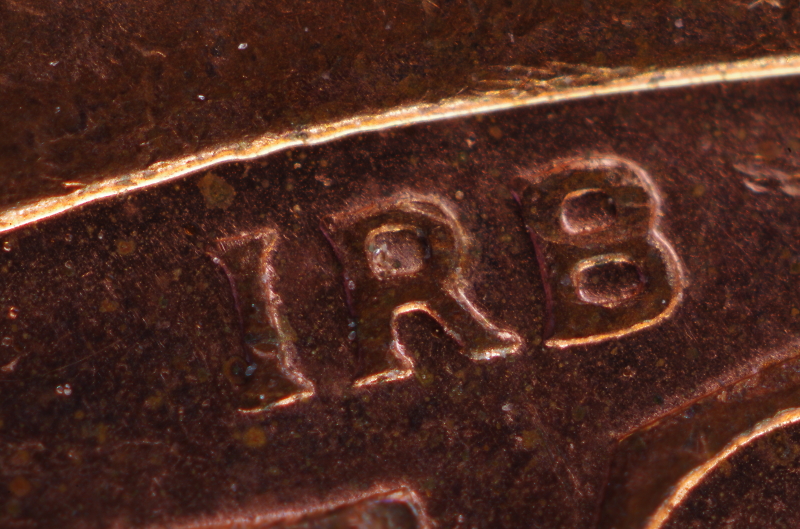
Single frame, SOOC.
(Think I'll do a stack & see what happens.....)
Roger.
I thought I was losing it to be honest!
Got it all set up last evening, popped-off a frame or two....
RUBBISH!
Cut a long srtory short, this morning re-checked every thing. Thought I had over-reached myself,TBH.
Questioned in my mind everything,.
Then it dawned. I'd been using my right-angle finder M, for the focus, checked on L/V.
I'd knocked the dioptre focus on the eyepiece of the finder out of thingy!
Come back all I said about that nice Mr. Pentax & his b****y M lenses!!!
Anyway here's mine, albeit on a new(ish) 2p piece:

Single frame, SOOC.
(Think I'll do a stack & see what happens.....)
Roger.
The more I look, the more there is to see!
Posted 15/02/2021 - 15:58
Link
...& here it is.

Stack of 9 in Combine ZP.
No crop.
Elements 11, Auto Levels only.
Roger.

Stack of 9 in Combine ZP.
No crop.
Elements 11, Auto Levels only.
Roger.
The more I look, the more there is to see!
Posted 15/02/2021 - 17:22
Link
It appears that Elements "chose" to crop/trim the stacking artifacts off of that last (stack) image,
Sorry about that!
Roger.
Sorry about that!
Roger.
The more I look, the more there is to see!
Posted 15/02/2021 - 20:03
Link
Any idea of the distance between each shot in the stack? And how far those letters protrude from the surface? (So I know what to aim for...:wink
Steve
Steve
Posted 15/02/2021 - 22:57
Link
Don't know the diff between each shot, since that'not how I shoot it......
See images 1 & 2, showing the arc of degrees which is concentric with the 200mm f4 lens on which it is held, with a rubber band around the focus ring. Its position on the circumference of the ring is adjustable to suit the position of the focus ring for the particular image,
The pointer, an insect (black) needle taped to a double-wound garden wire is adjustable to suit. It is anchored by a couple of button magnets to the distance scale bar on either standard of the Auto Bellows M.
in this case the front one.
Focus is set by:
Coarse focus with the focus-rail assembly moved fore/aft on the SmallRig rails which are screwed to the 22mm oak base-board.
Secondary focus by moving the bellows on its built-in focus rail, having set the bellows standards to achieve the required magnification.
To set the focus range for the stack:
Using L/V, find the nearest point of out-of focus. Make a note of the degrees position of the pointer.
Focus through the subject until all becomes out of focus at the back end. Make a not of the pointer finishing degree position.
I then decide how many shots to take for that depth of image & at what f stop. I rarely, if ever, take more the 25, otherwise my computer begins to glow & consider spontaneously combusting.....
The finest step I can achieve with this set-up is 0.5 degrees, which when translated to axial focus movement of the lens is "pretty small".
This image of the "IRB" was 9 at 0.5 degrees., making a total of 4.5 degrees of focus, plus.


It certainly becomes easier to do, rather than describe!
Hope this helps & good luck!
Roger.
See images 1 & 2, showing the arc of degrees which is concentric with the 200mm f4 lens on which it is held, with a rubber band around the focus ring. Its position on the circumference of the ring is adjustable to suit the position of the focus ring for the particular image,
The pointer, an insect (black) needle taped to a double-wound garden wire is adjustable to suit. It is anchored by a couple of button magnets to the distance scale bar on either standard of the Auto Bellows M.
in this case the front one.
Focus is set by:
Coarse focus with the focus-rail assembly moved fore/aft on the SmallRig rails which are screwed to the 22mm oak base-board.
Secondary focus by moving the bellows on its built-in focus rail, having set the bellows standards to achieve the required magnification.
To set the focus range for the stack:
Using L/V, find the nearest point of out-of focus. Make a note of the degrees position of the pointer.
Focus through the subject until all becomes out of focus at the back end. Make a not of the pointer finishing degree position.
I then decide how many shots to take for that depth of image & at what f stop. I rarely, if ever, take more the 25, otherwise my computer begins to glow & consider spontaneously combusting.....
The finest step I can achieve with this set-up is 0.5 degrees, which when translated to axial focus movement of the lens is "pretty small".
This image of the "IRB" was 9 at 0.5 degrees., making a total of 4.5 degrees of focus, plus.


It certainly becomes easier to do, rather than describe!
Hope this helps & good luck!
Roger.
The more I look, the more there is to see!
Posted 16/02/2021 - 00:37
Link
See if I've got this right. I follow the way you discover the total focus distance and divvy it up according the the number of shots you will use but you are dealing with (a) a linear focusing method and (b) a rotary one. The pointer is fixed to something mounted on the linear method yet the scale is rotary. Are you moving the slider, using the focus knob or are you twisting the focus ring of the lens, which rotates the entire protractor scale against the fixed needle?
Posted 16/02/2021 - 08:40
Link
O.K., David.
I'm using the 200 f4 to focus.
It was a case of finding a way to move/focus the assembly/lens by very small increments, smaller than is possible with the (rotary) focus ring alone or using the linear focus rail.
The protractor is fixed to the focus ring of the lens. The pointer is fixed to the bellows, which, after preliminary coarse focus, does not move. This fixed point could be anywhere, but not anywhere that will move in this final, fine focus stage.
As the lens is focused, the focus ring "revolves", taking the protractor with it. The pointer does not move. The degree markings move past the fixed pointer. Et voila!
(I have toyed with relating the rotary, degrees scale, which is entirely abstract to the normal function of the lens, to the depth of focus "steps" which Steve referred to, but this will be different throughout the focus range of the lens....& , as far as stacking is concerned, though interesting, would be entirely irrelevant.)
As I said, it's easier to do than describe & oh, by the way, it works!
Thanks for the continued interest shown,
Roger.
I'm using the 200 f4 to focus.
It was a case of finding a way to move/focus the assembly/lens by very small increments, smaller than is possible with the (rotary) focus ring alone or using the linear focus rail.
The protractor is fixed to the focus ring of the lens. The pointer is fixed to the bellows, which, after preliminary coarse focus, does not move. This fixed point could be anywhere, but not anywhere that will move in this final, fine focus stage.
As the lens is focused, the focus ring "revolves", taking the protractor with it. The pointer does not move. The degree markings move past the fixed pointer. Et voila!
(I have toyed with relating the rotary, degrees scale, which is entirely abstract to the normal function of the lens, to the depth of focus "steps" which Steve referred to, but this will be different throughout the focus range of the lens....& , as far as stacking is concerned, though interesting, would be entirely irrelevant.)
As I said, it's easier to do than describe & oh, by the way, it works!
Thanks for the continued interest shown,
Roger.
The more I look, the more there is to see!
Posted 16/02/2021 - 09:39
Link
Aha, I now understand how you're getting the fine control. A brilliant bit of creative improvisation.
Does the fine focus work because the 200 f4 is changing its point of focus or because the attached reversed lens moves back/forwards as the focus ring of the 200 f4 is rotated? Or to put it another way, would it work if an internal focus lens (like the DA300 f4) were used instead of the 200?
You ought to patent your 'device' before a bloke in a shed in Shanghai makes a cheap, plastic copy and starts selling it on e-bay!
Steve
Does the fine focus work because the 200 f4 is changing its point of focus or because the attached reversed lens moves back/forwards as the focus ring of the 200 f4 is rotated? Or to put it another way, would it work if an internal focus lens (like the DA300 f4) were used instead of the 200?
You ought to patent your 'device' before a bloke in a shed in Shanghai makes a cheap, plastic copy and starts selling it on e-bay!
Steve
Posted 16/02/2021 - 14:15
Link
Thanks, Steve.
I think for these purposes, the reversed lens' role is a passive one, but just as a carrier for the iris to stop down with.
I would have thought that, as long as the lens has a manual focus ring for the protractor to sit on, focal length is irrelevant.
You're simply focusing the "main" lens as you would in any other circumstances, it's just that it's that bit closer than normal!
Just pop an 18mm wide angle backwards on the front of a 300 & see what happens.....!
Go for it,
Roger.
I think for these purposes, the reversed lens' role is a passive one, but just as a carrier for the iris to stop down with.
I would have thought that, as long as the lens has a manual focus ring for the protractor to sit on, focal length is irrelevant.
You're simply focusing the "main" lens as you would in any other circumstances, it's just that it's that bit closer than normal!
Just pop an 18mm wide angle backwards on the front of a 300 & see what happens.....!
Go for it,
Roger.
The more I look, the more there is to see!
Add Comment
To leave a comment - Log in to Pentax User or create a new account.




2927 posts
18 years
South Dorset
Another way around the focusing is mount the target on a separate focus slider on a tripod, line it up carefully with the camera-lens ensemble and then use the focus slider's screw to move the target. It's a lot lighter than the camera and stuff (which could move disastrously with the slightest nudge) and can be accurately positioned much more easily.
For indoor macro, an alternative is to use a big clamp with mounting screw on top (mine's Novoflex, other brands are available :wink, tightly clamped to the edge of a sturdy table or other work surface. Focus rack and camera on top, rock solid, can't topple over. Works well for me atttached to a kitchen work surface. The only drawback is that in the interests of domestic harmony and me not going hungry, it has to be cleared away when I've finished .
Steve