using filters

Posted 18/06/2009 - 12:45
Link
UV and Skylight filters are useful at high altitudes to reduce excess blue and haze.
I don't use them all the time for protecting the lens though.
Certainly use of filters where they are needed is a good idea. Lots of filter effects can be done in Photoshop, but obviously not those that demand the light is filtered before it reaches the sensor.
I don't use them all the time for protecting the lens though.
Certainly use of filters where they are needed is a good idea. Lots of filter effects can be done in Photoshop, but obviously not those that demand the light is filtered before it reaches the sensor.
Best regards, John

Posted 18/06/2009 - 13:52
Link
johnriley wrote:
UV and Skylight filters are useful at high altitudes to reduce excess blue and haze.
Also still today, many coatings cut down UV light and also the screen infront of the sensor has an UV coating so had an UV filter still effect like it had in the film days?
UV and Skylight filters are useful at high altitudes to reduce excess blue and haze.
Stefan

K10D, K5
DA* 16-50, DA* 50-135, D-FA 100 Macro, DA 40 Ltd, DA 18-55
AF-540FGZ

K10D, K5
DA* 16-50, DA* 50-135, D-FA 100 Macro, DA 40 Ltd, DA 18-55
AF-540FGZ
Posted 18/06/2009 - 15:07
Link
Maybe not as much, but removing scattered light before it hits the lens seems like a good idea in some extreme circumstances. The only way to be sure is to take some with and some without, something which I haven't done recently.
Best regards, John

Posted 18/06/2009 - 16:22
Link
I use a polariser as often as the light will let me get away with it.
Kris Lockyear
It is an illusion that photos are made with the camera… they are made with the eye, heart and head. Henri Cartier-Bresson
Lots of film bodies, a couple of digital ones, too many lenses (mainly older glass) and a Horseman LE 5x4.
It is an illusion that photos are made with the camera… they are made with the eye, heart and head. Henri Cartier-Bresson
Lots of film bodies, a couple of digital ones, too many lenses (mainly older glass) and a Horseman LE 5x4.

Posted 18/06/2009 - 17:08
Link
It struck me that, bearing in mind the possibility of doing much more useful correction 'at home' with digital, a filter could introduce much more 'top cut', to get rid of the scattered UV and violet (even), and yet you could still do some compensation to get the colour balance right. All that would be missing would be the 'far blues' but it would be easy to get 'white' whites afterward.
Now I've thought about it, I would expect a whole new set of filters to be on the market 'specially' for digital cameras. Manufacturers don't usually miss a trick when there's a possible new market. Perhaps there are some and I just haven't spotted them.
Now I've thought about it, I would expect a whole new set of filters to be on the market 'specially' for digital cameras. Manufacturers don't usually miss a trick when there's a possible new market. Perhaps there are some and I just haven't spotted them.
Posted 18/06/2009 - 17:38
Link
sophiecentaur wrote:
Now I've thought about it, I would expect a whole new set of filters to be on the market 'specially' for digital cameras. Manufacturers don't usually miss a trick when there's a possible new market. Perhaps there are some and I just haven't spotted them.
Uv filter will do that and always has but since many lens coatings and even the sensor screens have coatings the difference they make becomes smaller.Now I've thought about it, I would expect a whole new set of filters to be on the market 'specially' for digital cameras. Manufacturers don't usually miss a trick when there's a possible new market. Perhaps there are some and I just haven't spotted them.
Like Womble I also use a polariser as much as I can, even indoors if light allows it.
Polariser really cuts down the have and reflections makeing colours more vibrant and brilliant. You need to get some good pols though, cheap ones aren't always colour neutral so really get the best you can get get.
Stefan
K10D, K5
DA* 16-50, DA* 50-135, D-FA 100 Macro, DA 40 Ltd, DA 18-55
AF-540FGZ
K10D, K5
DA* 16-50, DA* 50-135, D-FA 100 Macro, DA 40 Ltd, DA 18-55
AF-540FGZ

Posted 18/06/2009 - 19:17
Link
I carry UV (always on the lenses), a polariser, NDs and ND grads. Basically to do all the things you can't do in software. But I still have my red filter (screw mount) for my B&W film.
One of the great 'digital filters' is the infrared - by effectively placing the filter in front of the sensor, not the lens, you can still see through the viewfinder normally. This would be theorhetically possible with a film camera, but very impracticle.
One of the great 'digital filters' is the infrared - by effectively placing the filter in front of the sensor, not the lens, you can still see through the viewfinder normally. This would be theorhetically possible with a film camera, but very impracticle.
Posted 18/06/2009 - 21:19
Link
greynolds999 wrote:
One of the great 'digital filters' is the infrared - by effectively placing the filter in front of the sensor, not the lens, you can still see through the viewfinder normally. This would be theorhetically possible with a film camera, but very impracticle.
And here comes one of the problem with modern sensors, most of them have en UV coating on the sensor screen so they block Infrared light so you need to replace/remove that as well.One of the great 'digital filters' is the infrared - by effectively placing the filter in front of the sensor, not the lens, you can still see through the viewfinder normally. This would be theorhetically possible with a film camera, but very impracticle.
I've a IF filter for the K10D but it isn't adapted so need to take photos of 30 seconds at f/5.6 during a sunny day...
Stefan
K10D, K5
DA* 16-50, DA* 50-135, D-FA 100 Macro, DA 40 Ltd, DA 18-55
AF-540FGZ
K10D, K5
DA* 16-50, DA* 50-135, D-FA 100 Macro, DA 40 Ltd, DA 18-55
AF-540FGZ

Posted 18/06/2009 - 21:46
Link
Anvh wrote:
And here comes one of the problem with modern sensors, most of them have en UV coating on the sensor screen so they block Infrared light so you need to replace/remove that as well...
Surely a UV filter blocks UV light
And here comes one of the problem with modern sensors, most of them have en UV coating on the sensor screen so they block Infrared light so you need to replace/remove that as well...
Posted 18/06/2009 - 22:12
Link
Sensors are very sensitive to IR and the scattering of IR light would detract from the image, so most cameras have an IR blocking filter.
Depending on how strong this filtration is depends on how effective the camera is with a IR filter over the lens (one that allows only IR light)
DSLRs can be modified for proper IR photography. The "hot filter" over the sensor is replaced with clear glass.
Depending on how strong this filtration is depends on how effective the camera is with a IR filter over the lens (one that allows only IR light)
DSLRs can be modified for proper IR photography. The "hot filter" over the sensor is replaced with clear glass.
Best regards, John
Posted 19/06/2009 - 10:10
Link
As I read this the adverts have very cleverly picked up what we are discussing and have put the big advert to the right. There is a page showing how to DIY this on a D50.
They describe taking out a 'hotmirror' filter (IR blocking) and putting the IR filter in. Worth a read... link
EDIT:
They describe taking out a 'hotmirror' filter (IR blocking) and putting the IR filter in. Worth a read... link
EDIT:
johnriley wrote:
The "hot filter" over the sensor is replaced with clear glass.
I think if you replace the filter with clear glass you would then need a conventional IR filter on your lens. By placing an IR filter on the sensor you can compose images more easily (but you sould have to work out the exposure).
The "hot filter" over the sensor is replaced with clear glass.
Posted 19/06/2009 - 10:14
Link
Yes, that's true. The point is that you need some glass there to replace the removed filter.
Best regards, John
Posted 19/06/2009 - 11:12
Link
Fair point. Keep thinking I should give this a try, but need to find a very cheap camera to do it with!
Posted 19/06/2009 - 11:28
Link
Oggy wrote:
Yes sorry my mistakes but it has a coating that prevents of infrared light coming onto the sensor, many coatings cut down to only visible light.Anvh wrote:
And here comes one of the problem with modern sensors, most of them have en UV coating on the sensor screen so they block Infrared light so you need to replace/remove that as well...
Surely a UV filter blocks UV lightAnd here comes one of the problem with modern sensors, most of them have en UV coating on the sensor screen so they block Infrared light so you need to replace/remove that as well...
John Riley explain it perfectly again
And i need some more sleep
Stefan
K10D, K5
DA* 16-50, DA* 50-135, D-FA 100 Macro, DA 40 Ltd, DA 18-55
AF-540FGZ
K10D, K5
DA* 16-50, DA* 50-135, D-FA 100 Macro, DA 40 Ltd, DA 18-55
AF-540FGZ
Add Comment
To leave a comment - Log in to Pentax User or create a new account.



86 posts
17 years
How many contributors here use polarising filters and UV filters?
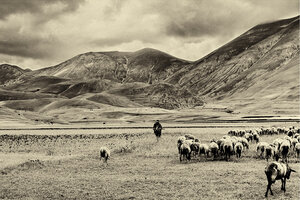
I have some potentially very nice pictures taken in the Pyrennese but they have suffered from the effects of haze. What are your thoughts about using a UV filter - or even something stronger - for most outdoor shots? Is there a downside? RAW would allow me to correct for any imbalance in a way that film processing could never have done.