Haze filters and DSLRs

Posted 06/10/2009 - 15:28
Link
Wow you did your homework
I believe most sensor have an UV coating on their protection-screen so those will probable be specialize for digital.
I self use Polariser filters to cut haze.
I believe most sensor have an UV coating on their protection-screen so those will probable be specialize for digital.
I self use Polariser filters to cut haze.
Stefan

K10D, K5
DA* 16-50, DA* 50-135, D-FA 100 Macro, DA 40 Ltd, DA 18-55
AF-540FGZ

K10D, K5
DA* 16-50, DA* 50-135, D-FA 100 Macro, DA 40 Ltd, DA 18-55
AF-540FGZ

Posted 06/10/2009 - 16:09
Link
Yes but getting rid of haze all the time is not what you want - that will get rid of some wanted colour components in some pictures. A built in UV filter shouldn't remove any of the visible haziness. A haze filter would be a 'least worst' treatment (short of a large vacuum cleaner to get rid of all the dust etc.). What I'm after is a chainsaw for removing the upper portion (perhaps a half?) of the overall blue response. It will have repercussions on the blue channel noise performance if it's there all the time.
BTW, does a haze necessarily produce polarisation? I can see that a polarizer could sometimes improve pictures, though. And a polarizer introduces a stop (?) of light loss, too, which could be relevant on occasions.
I'd be really surprised if there wasn't a hugely expensive DSLR version for reducing haze better produced by someone.
BTW, does a haze necessarily produce polarisation? I can see that a polarizer could sometimes improve pictures, though. And a polarizer introduces a stop (?) of light loss, too, which could be relevant on occasions.
I'd be really surprised if there wasn't a hugely expensive DSLR version for reducing haze better produced by someone.

Posted 06/10/2009 - 17:10
Link
Some filter manufactures (e.g. Hoya) do make 'digital' versions of filters perhaps the reasoning you have given is why they do so.
Good luck
Bob
Pentax user since 1978, Digital since 1997.
Kit includes: K-7, K20D, K10D, *istDS, full set DA* lens, etc
Bob
Pentax user since 1978, Digital since 1997.
Kit includes: K-7, K20D, K10D, *istDS, full set DA* lens, etc
Posted 06/10/2009 - 17:23
Link
Nothing about filters but you said, you want a UV filter to cut the blue channel so that you've less noise.
You can of course select the blue layer and do a noise reduction on it, I have done that before and it's quite effect, also because your eyes aren't as sensitive for blue as for green and red.
ps. s polariser introduces a 1/2 stop to a full stop.
You can of course select the blue layer and do a noise reduction on it, I have done that before and it's quite effect, also because your eyes aren't as sensitive for blue as for green and red.
ps. s polariser introduces a 1/2 stop to a full stop.
Stefan
K10D, K5
DA* 16-50, DA* 50-135, D-FA 100 Macro, DA 40 Ltd, DA 18-55
AF-540FGZ
K10D, K5
DA* 16-50, DA* 50-135, D-FA 100 Macro, DA 40 Ltd, DA 18-55
AF-540FGZ
Posted 06/10/2009 - 23:28
Link
NO, I meant that cutting the blue channel would have 'repercussions' - i.e. less signal so worse signal to noise. Good idea of yours to reduce the blue noise in your pictures by reducing the blue video bandwidth. PAL TV does just that, in effect.
As a good polarizer chucks away half the energy (of un polarized sources) it should be up to one stop reduction on average.
Bob
I may contact Hoya and ask them to put their money where their mouths are.
As a good polarizer chucks away half the energy (of un polarized sources) it should be up to one stop reduction on average.
Bob
I may contact Hoya and ask them to put their money where their mouths are.

Posted 06/10/2009 - 23:50
Link
As always, it depends what you are trying to achieve.
By and large I no longer use filters with digital, preferring to apply the effects in Photoshop as required. The polariser remains the only filter to retain its usefulness, unless a protection filter is needed to shield the lens perhaps from salt water spray.
If you want to prevent scattered blue light from ever reacing the lens then a Haze or Skylight filter could be used, but would remove the mistiness that just might enhance an image.
By and large I no longer use filters with digital, preferring to apply the effects in Photoshop as required. The polariser remains the only filter to retain its usefulness, unless a protection filter is needed to shield the lens perhaps from salt water spray.
If you want to prevent scattered blue light from ever reacing the lens then a Haze or Skylight filter could be used, but would remove the mistiness that just might enhance an image.
Best regards, John
Posted 07/10/2009 - 10:59
Link
I agree about the Photoshop thing.
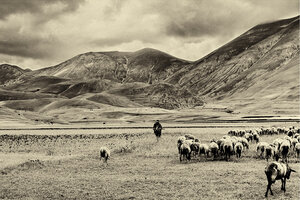
However, you often need very little actual haze to achieve 'mood' in a landscape picture. Your eye seems to be much better at seeing distant mountains through haze than the camera is. The 'perspective of light' thing is very effective even when it's only just present.
However, you often need very little actual haze to achieve 'mood' in a landscape picture. Your eye seems to be much better at seeing distant mountains through haze than the camera is. The 'perspective of light' thing is very effective even when it's only just present.
Add Comment
To leave a comment - Log in to Pentax User or create a new account.



86 posts
17 years
This leads me to conclude that the optimal haze filter for digital could have a far steeper cut-off at shorter wavelengths than what is best for film. This is because the amount of scattering is proportional to the fourth power of one over the wavelength - hence cutting out an extra few percent off the UV end of the blue light curve could be achieved with a sharper filter and this would make a significant difference to the visibility of the haze without upsetting the general colourimetry of the picture.
Question: are there 'special' haze filters available for DSLRs yet?
I think there should be. Any opinions or even experiences?