
All Forum Comments

Comment by Nicolas posted on DA*300/4 with Kenko Teleplus 1,5 SHQ and Tokina close-up 0,4dpt at 04/01/2010 - 23:07
Hi
With a pkm adapter you won't have to stop down to take the shot, as thoughton suggests. You use the aperture ring on the lens tu adjust aperture (it stays open, meanwhile), and you can use the green button to meter (it won't be very precise with small diafragms), and take the shot. The mayor inconveniance will be that you won't have P-TTL flash control, and that's important for macro, and metering will be off many times. Much better to get a PKA Adapter.
Regards - Klaus
With a pkm adapter you won't have to stop down to take the shot, as thoughton suggests. You use the aperture ring on the lens tu adjust aperture (it stays open, meanwhile), and you can use the green button to meter (it won't be very precise with small diafragms), and take the shot. The mayor inconveniance will be that you won't have P-TTL flash control, and that's important for macro, and metering will be off many times. Much better to get a PKA Adapter.
Regards - Klaus
Comment by Nicolas posted on Tamron f2.8. mf 90mm lens at 27/12/2009 - 09:06
A Tamron SP 2,5/90 (Adaptall), with an PKA-Adapter, is the lens what I use most frecuently. You can see lots of photos with it at this site:
link
It's an excelent lens. The limit of scale to 1:2 is a bit limiting, but no too much, as there are remedies. To get bigger scale easyest is to use a Teleconverter: you maintain ability to focus to larger distances; I almost all the time use this lens with an Tamron TC 1,4 (Adaptall), so I have an 3,7/120, a very useful focal length for insects. Maximum scale with this TC is about 0,7, enougph for most situations. For big scale, the specific 45mm extensions (it is possible to use more then one, and you can combine with TCs). All these TCs and extension rings go between the lens and the PKA - mount. That's a very flexible system.
The PKA adapter is a bit difficult to get these days. I got two of them in a regular local shop: there were some left at a distributer. Using it with the more common PK or PK-M adapter (same thing) is less comfortable and limiting, as the P-TTL flash control won't work, and metering will be less precise and easy.
The more recent 2.8/90 (specific PKA mount; non Adaptall) won't need specific adapters nor complements to get scale 1:1, but it might be somewhat more expensive. This lens will reduce focal lenght at bigger scales (as all modern macro lenses), the 2,5/90 doesn't.
Regards - Klaus
link
It's an excelent lens. The limit of scale to 1:2 is a bit limiting, but no too much, as there are remedies. To get bigger scale easyest is to use a Teleconverter: you maintain ability to focus to larger distances; I almost all the time use this lens with an Tamron TC 1,4 (Adaptall), so I have an 3,7/120, a very useful focal length for insects. Maximum scale with this TC is about 0,7, enougph for most situations. For big scale, the specific 45mm extensions (it is possible to use more then one, and you can combine with TCs). All these TCs and extension rings go between the lens and the PKA - mount. That's a very flexible system.
The PKA adapter is a bit difficult to get these days. I got two of them in a regular local shop: there were some left at a distributer. Using it with the more common PK or PK-M adapter (same thing) is less comfortable and limiting, as the P-TTL flash control won't work, and metering will be less precise and easy.
The more recent 2.8/90 (specific PKA mount; non Adaptall) won't need specific adapters nor complements to get scale 1:1, but it might be somewhat more expensive. This lens will reduce focal lenght at bigger scales (as all modern macro lenses), the 2,5/90 doesn't.
Regards - Klaus
Comment by Nicolas posted on Macro lens for my K10D at 26/12/2009 - 23:56
Another sample for the use of the Tokina acromatic close up lens (0,4 diopters) with the DA*300/4. I cannot find any degradation of quality, and the additional scale is very useful.

The spider is a Argiope trifasciata, constructing a new web the day of yesterday.
Regards - Klaus

The spider is a Argiope trifasciata, constructing a new web the day of yesterday.
Regards - Klaus
Comment by Nicolas posted on DA*300/4 with Kenko Teleplus 1,5 SHQ and Tokina close-up 0,4dpt at 26/12/2009 - 19:43
Anvh wrote:
Welcome to the forum and a very nice photo!
Problem with the autofocus with TC is that it becomes to dark to focus, I believe f/5.6 is the recommend max aperture.
You might get better results if you bring the focus close manually and then focus.
The DA300/4 with the TC 1,5x is not much less than 5,6, and even the DA 18-55 with the same TC focuses without mayor dificulties (with an aperture of about 8 ). You are right that sometimes prefocussing manually very close to the point it catches focus with the 300. Welcome to the forum and a very nice photo!
Problem with the autofocus with TC is that it becomes to dark to focus, I believe f/5.6 is the recommend max aperture.
You might get better results if you bring the focus close manually and then focus.
It may be a bit speculative, but from what I observe with the AF moving forth and back, I get the impression that the problem is more fundamental: for the AF-system there is just the DA300 attached, and it makes the adjustments measuring the degree of OOF that it detects. With the TC the detected amount of OOF is bigger. For this reason it makes a bigger step, too big. Then it goes in the oposite direction, with the same result. Because of the smaller degree of OOF that the AF-system will detect with shorter lenses it may catch focus with these lenses more easily.
If I am right, we would have to wait for a specific TC disigned for Pentax AF to get a better result with longer lenses.
Best regards
Klaus
Comment by Nicolas posted on DA*300/4 with Kenko Teleplus 1,5 SHQ and Tokina close-up 0,4dpt at 24/12/2009 - 15:26
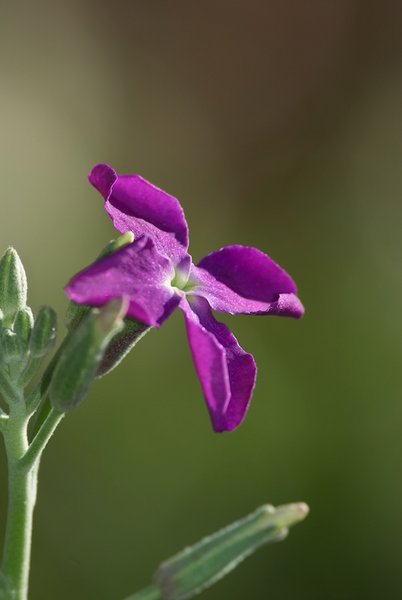
Here is the promised sample (I hope I get it right):

Comment by Nicolas posted on DA*300/4 with Kenko Teleplus 1,5 SHQ and Tokina close-up 0,4dpt at 24/12/2009 - 14:15
Hello
I am new on this Forum. German, live in Spain, some posts on dpreview as Nicols (should have been Nicolás, but the accentuated á didn't pass). Do mostly macro of insects and plants, some birds… quite a lot are on this spanish Forum link
Some days ago I have received my new DA*300 (good price on waltersphotovideo.uk.com). A fabulous lens, according to the few acceptable fotos I have been able to take these days of bad weather. Another leage in comparisn to my Tamron SP 5,6/300 (Adaptall).
I wanted to tell you about the results of some trying out of the TC and a Tokina close-up lens.
First the Kenko Teleplus 1,5 SHQ:
• I measured the increase of scale with this TC. It is 1,54x, same with the DA 18-55, a Tamron SP 2,5/90 and the DA*300. In comparisn, my tamron SP 1,4 (Adaptall) increases the scale only by 1,44x (with the Tamron SP 2,5/90). I don't have the Tamron 1.4x pz-af MC4, so I cannot measure it's effect, but I suspect that it is not true what some have said on dpreview, that the Tamron and Kenko have the same optics. If somebody wants to try out, it is very easy: camera on a tripod, foto with the TC of some scene with contrasty items in some of its extremes (I preferred far away objects; closeups might give slightly different results). Without moving the camera, another shot without the TC, and measuring on the computer screen of the distance between the same points in the two fotos. Then devide the value with TC by the one without, and you have the factor.
• Autofocus with the Kenko SHQ: The electrical contacts for SDM work fine and the motor in the lens works, but with the DA*300 it almost never locks focus. With the DA 18-55 it works more or les fine (screw drive AF, evidently). With the 300, it makes continous steps in front and beyond the objects plane, without aproximating. I suppose this is related with the augmenting effect of the TC: the increased scale suggests to the AF-system that the object is further out of focus then it really is, and the correcting move is too strong, in one direction, and then in the other, and so on… With shorter focal lenght depth of field is much wider, and the AF might move into a range of tolerance that allows to close focus.
• Scale at minimal focus distance: it is with my copy 0,26 (1:3,9), a bit more than specified by Pentax (0,24). With the Kenko 1,5x it increases to 0,39 (1:2,54).
Second, the acromatic close-up lens Tokina AT-X 72mm with about 0,4 diopters:
• The use of a step down ring from 77 to 72mm doesn't create problems in the corners
• The minimal focus distance decreases from 1,4m to about one meter (I havn't measured)
• The effect on scale: I get a scale of 0,37 (1:2,7). Not bad for bigger butterflies and dragonflies
• Up to now I havn't observed any negative effects on image quality. I will try to show a sample in a respons to this message.
I hope my observations are of some interest. With respect to the quality effect of the Kenko I havn't yet conclusive results, but I have the impression that it might resolve a bit more of detail with may K10D than
using just the DA*300, but there is not much difference. The TC is not bad, the cuestion is if it is really useful.
Best regards
Klaus
I am new on this Forum. German, live in Spain, some posts on dpreview as Nicols (should have been Nicolás, but the accentuated á didn't pass). Do mostly macro of insects and plants, some birds… quite a lot are on this spanish Forum link
Some days ago I have received my new DA*300 (good price on waltersphotovideo.uk.com). A fabulous lens, according to the few acceptable fotos I have been able to take these days of bad weather. Another leage in comparisn to my Tamron SP 5,6/300 (Adaptall).
I wanted to tell you about the results of some trying out of the TC and a Tokina close-up lens.
First the Kenko Teleplus 1,5 SHQ:
• I measured the increase of scale with this TC. It is 1,54x, same with the DA 18-55, a Tamron SP 2,5/90 and the DA*300. In comparisn, my tamron SP 1,4 (Adaptall) increases the scale only by 1,44x (with the Tamron SP 2,5/90). I don't have the Tamron 1.4x pz-af MC4, so I cannot measure it's effect, but I suspect that it is not true what some have said on dpreview, that the Tamron and Kenko have the same optics. If somebody wants to try out, it is very easy: camera on a tripod, foto with the TC of some scene with contrasty items in some of its extremes (I preferred far away objects; closeups might give slightly different results). Without moving the camera, another shot without the TC, and measuring on the computer screen of the distance between the same points in the two fotos. Then devide the value with TC by the one without, and you have the factor.
• Autofocus with the Kenko SHQ: The electrical contacts for SDM work fine and the motor in the lens works, but with the DA*300 it almost never locks focus. With the DA 18-55 it works more or les fine (screw drive AF, evidently). With the 300, it makes continous steps in front and beyond the objects plane, without aproximating. I suppose this is related with the augmenting effect of the TC: the increased scale suggests to the AF-system that the object is further out of focus then it really is, and the correcting move is too strong, in one direction, and then in the other, and so on… With shorter focal lenght depth of field is much wider, and the AF might move into a range of tolerance that allows to close focus.
• Scale at minimal focus distance: it is with my copy 0,26 (1:3,9), a bit more than specified by Pentax (0,24). With the Kenko 1,5x it increases to 0,39 (1:2,54).
Second, the acromatic close-up lens Tokina AT-X 72mm with about 0,4 diopters:
• The use of a step down ring from 77 to 72mm doesn't create problems in the corners
• The minimal focus distance decreases from 1,4m to about one meter (I havn't measured)
• The effect on scale: I get a scale of 0,37 (1:2,7). Not bad for bigger butterflies and dragonflies
• Up to now I havn't observed any negative effects on image quality. I will try to show a sample in a respons to this message.
I hope my observations are of some interest. With respect to the quality effect of the Kenko I havn't yet conclusive results, but I have the impression that it might resolve a bit more of detail with may K10D than
using just the DA*300, but there is not much difference. The TC is not bad, the cuestion is if it is really useful.
Best regards
Klaus
Comment by Nicolas posted on DA*300/4 with Kenko Teleplus 1,5 SHQ and Tokina close-up 0,4dpt at 24/12/2009 - 14:01


I have been trying the Kenko 1,5x SHQ teleconverter with the DA*300. It is not easy to achieve an effective comparisn; it is hard to focus really on the spot, especially with the TC (AF is not useful; still is going back and front, only locks focus after prefocussing very close).
This 100% crop I think shows more detail then it would be possible to obtain without the TC. So, I think, it is useful, carefully focussed…
No sharpening; just standard setting of Aperture, without edge sharpening.
Best regards
Klaus