John Riley reviews this easily adapted, affordable 200mm f/4 telephoto lens from the Pentax M Series. John tells us about his experience using this vintage lens along with providing sample photos and his verdict.
Posted: 06/08/2025 - 18:12
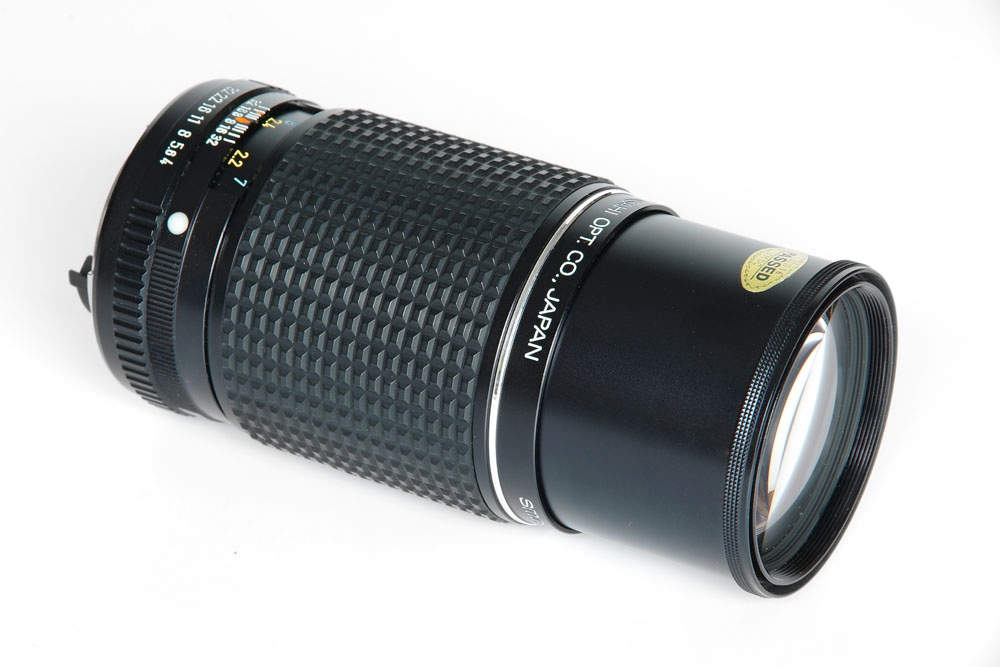
It is a constant amazement that the M series lenses from Pentax are not only beautiful jewels in themselves, but so very compact compared to current optics. In particular, they are slim because we have no electronics, no focusing motors and no weather seals. The focusing is manual and utterly smooth and slick. Frankly, the Pentax lenses of this era are smoother than even the most expensive options of the day. Such are the tactile pleasures of the M series, but will the lenses still be able to deliver the quality that we now expect. Will they survive the era of pixel peeping? The answer so far has been that they do manage to hold their head high against modern lenses, so let's now see if a longer telephoto can also prove to be up to the standard we demand.
Handling and Features
Introduced in 1977 in this version (there has been a 200mm f/4 in the range for many years before this one) and running through to 1984, the first impression is of a very slim and compact lens. This is achieved by using a fairly modest aperture of f/4 and also by restricting the close focusing to 2m, or 6.5 feet, giving a modest magnification of 0.13x. This is one of the areas where current zoom lenses have the advantage, focusing much closer and even almost down to macro distances in some cases. The 200mm f/4 is much more comfortable to use for medium to long distance photography, be it portraits, landscape, nature or sport.
For its day, the lens has a typical specification, utilising 6 elements in 5 groups, weighing in at 400g and measuring a very compact 63.5mm x 111mm. There is a built in slide out lens hood, a feature of many Pentax M series telephoto lenses and a great convenience. The diaphragm has 8 blades and the filter thread is 52mm. The mount is the plain stainless steel K mount, with no electronic contacts.
With the exception of the Pentax K-3 Mark III, which will stop down M series lenses for us, the stop down green button method of metering and stopping down the lens needs to be used. The process has been described before, but it merits repeating here. The mode dial is set to M. The lens is manually focused. The aperture ring is used to set the required aperture. When the green button is pressed the camera meters and sets an approriate shutter speed for the aperture selected. Then release the shutter in the usual way and the exposure is made. This exposure can be modified by using the exposure compensation of the camera if desired. In the case of the K-3 Mark III the process is automated and is more convenient, but really the whole method required with the other DSLRs does not take long to become familiar with and is quick and easy enough to use reliably.
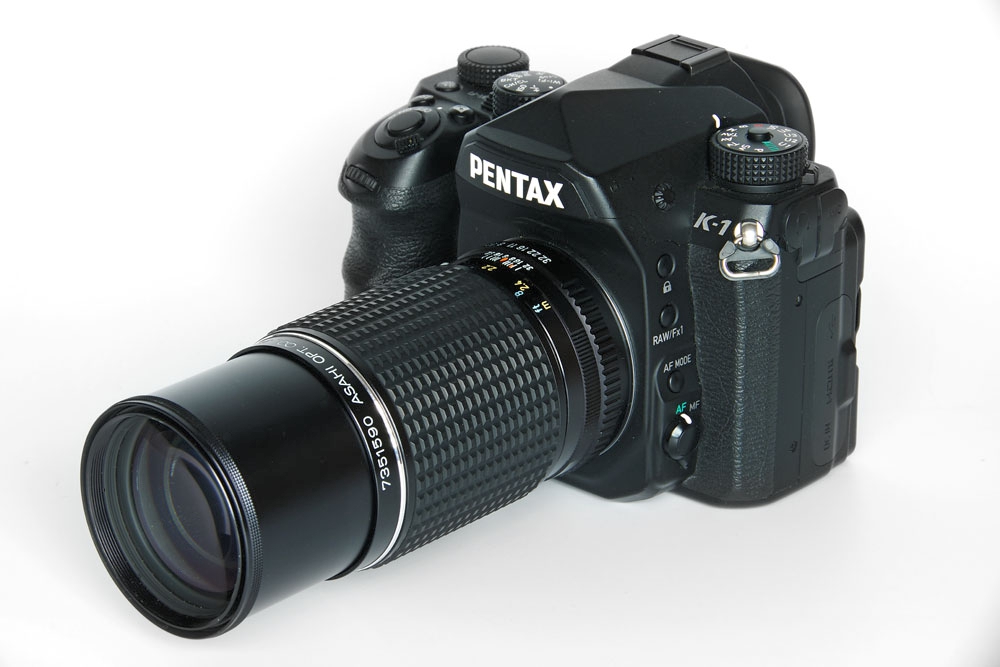
Focusing can be achieved using the viewfinder or Live View. If using the viewfinder, it is essential to make sure the dioptre adjustment is made for the photographer's eyesight. To do this properly, defocus the camera, point it at a blank subject such as a white wall or sky and adjust until the etched lines in the viewfinder are sharpest. Then our eyes are focusing on the focusing screen without strain.
Many tests over the years have shown that the human eye is very poor at judging when an image is sharpest and the amount of variation from shot to shot can be quite marked. Using Live View, the most accurate way to manually focus, first focus then press the OK button at the centre of the four way controller and prepare to be amazed at how far out the point of focus can be. It may be close enough for most purposes, but it makes a difference for the most accurate work and completing the focusing under magnification will give the best results. A half press on the shutter release will restore the full frame image.
Probably one of biggest disadvantages to using the 200mm f/4 is the lack of really close focusing. This is a telephoto lens intended for mid and long range use, in as small a package as possible. In that respect, it fulfils its intended function. Zoom lenses will always focus closer'
Still thinking about close focusing, one answer is to use the Pentax T6 2x converter, which results in a 400mm f/8 lens. We do not focus any closer, but at the same distance the image is magnified 2x, thus enlarging the subject significantly. Stopped down to f/11 or f/16 (on the lens) results are good, but wide open sharpness does suffer. CA suffers as well, and the converter does result in quite a bit of obvious colour fringing.
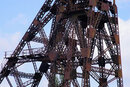
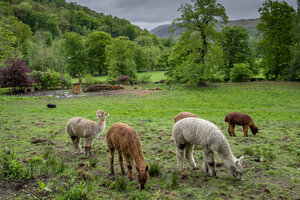
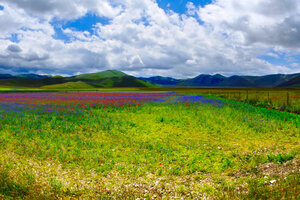
SMC Pentax-M f/4 Sample Photos















Performance
Whilst too long a lens for our MTF testing facility, the results look beautifully crisp and sharp. Slightly softer wide open and definitely losing the crisp edge by f/22 and f/32, the mid apertures can deliver very sharp results.
CA (Chromatic Aberration) is definitely visible as mainly purple fringing, but this only really becomes apparent when shooting sharp edges against bright sky. It is a relative weakness that is probably shared with most telephoto lenses of its day, but it is not a deal breaker for most photography.
SMC Pentax-M f/4 Aperture Range




Bokeh is the smoothness of the out of focus areas in an image. As we might expect, out of focus backgrounds are easy to achieve and the bokeh is smooth and relaxed. This makes the 200mm a great lens for portraiture and flower studies, albeit it with a fairly long working distance. This does mean a fairly long working distance for portraiture and becoming more distanced from the model, but it is workable and the perspective gives a very fattering look to the facial features.
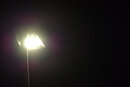
Flare is impressively absent, even when severe lighting is included in the frame. There is a faint coloured glow around the light in the sample image, but no obvious artefacts that would be too intrusive.
Value for Money
The SMC Pentax-M 200mm f/4 lens may not be currently in high demand, nor is it particularly rare, so anything from £20 upwards might be possible for a lens in great condition. Check the aperture for snappiness and look carefully through the glass to see if there are any signs of fungus. The focusing should be as smooth as silk on any M series Pentax lens. The aperture ring should be firm and positive but not heavy in operation. If all these things pass the test and the price is right then there is really nothing to lose.
Verdict
There are so many lovely lenses out there, many sat unused in drawers, cupboards and camera bags for decades. Because there is the potential for poor storage and hence fungus, this should be carefully checked for. If the usual simple tests are passed then at the price levels expected there is really nothing to lose and much to gain by giving an old M series lens a try out. The results will be excellent, the tactile feel of the lenses is a pleasure in itself and at the very least the exercise will be an enjoyable and interesting experience.
Further Reading
- Pentax M Series
- SMC Pentax-M 28mm f/2.8 Lens Review
- SMC Pentax-M 50mm f/1.4 Lens Review
- SMC Pentax-M 50mm f/1.7 Lens Review
- SMC Pentax-M 100mm f/2.8 Lens Review
- SMC Pentax-M 135mm f/3.5 Lens Review
- SMC Pentax-M 150mm f/3.5 Lens Review
Pros
- Very good sharpness
- Compact and light
- Great colour
- Ultra smooth operation
- Built in lens hood
Cons
- No weather sealing
- Not as close focusing as a modern zoom
- Some CA with demanding subjects
- Manual focus may not suit all
Specifications: SMC Pentax-M f/4 |
||||
| General | ||||
| Focal Type | Telephoto | |||
| Lens Mounts | Pentax K SMC-M | |||
| Availability | ||||
| Year announced | 1977 | |||
| Discontinued | Yes | |||
| Dimensions | ||||
| Diameter | 63.7mm | |||
| Height | 111mm | |||
| Weight | 400g | |||
| Construction | ||||
| Weather-sealed | No | |||
| Groups | 5 | |||
| Elements | 6 | |||
| Blades | 8 | |||
| Lens | ||||
| Maximum magnification | 0.13x | |||
| Filter Size | 52mm | |||
| Min Aperture | f/32 | |||
| Max Aperture | f/4 | |||
| Focusing | ||||
| Macro | No | |||
| Min Focus | 200cm | |||
| Focusing Type | Manual | |||

Steve

Add Comment
To leave a comment - Log in to Pentax User or create a new account.


1173 posts
22 years
Handsacre
Pentax Lenses 28-80 F, 300 DA*, 80-200 F, 35 F2.4 AL, M50 F1.7, 28-105 DFA, 20 F4 SMC
ONE UNITED Member