John Riley reviews the super versatile Pentax F 35-70mm zoom lens from the late 1980s. Easily purchased for very little expense, can this film zoom hold its own on digital sensors? John rigorously tests the lens to find out.
Posted: 30/03/2026 - 18:16
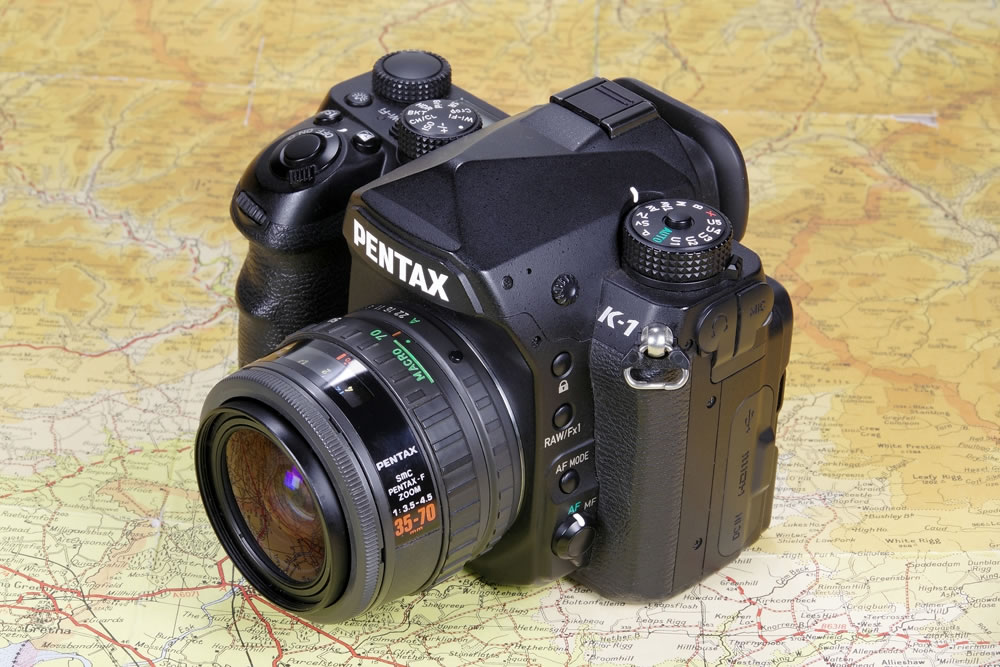
The Pentax F series is the first of the AF lens ranges, this 35-70mm zoom being one of the first small standard zooms. It dates from 1987 through to 1991, after which the F series gave way to the FA series lenses. The F series has its own following, and the range can potentially be found at prices that could be described as cheap as chips. They may be somewhat overlooked, but they are still Pentax lenses and the potential is there to find very serviceable AF lenses at very attractive prices. This SMC Pentax-F 35-70mm f/3.5-4.5 Zoom lens is in beautiful condition, and came with a very attractive price tag of zero. Clearly it passes the VFM test, so let's see how well it performs, using the 36MP Pentax K-1 full frame DSLR body.
Handling and Features
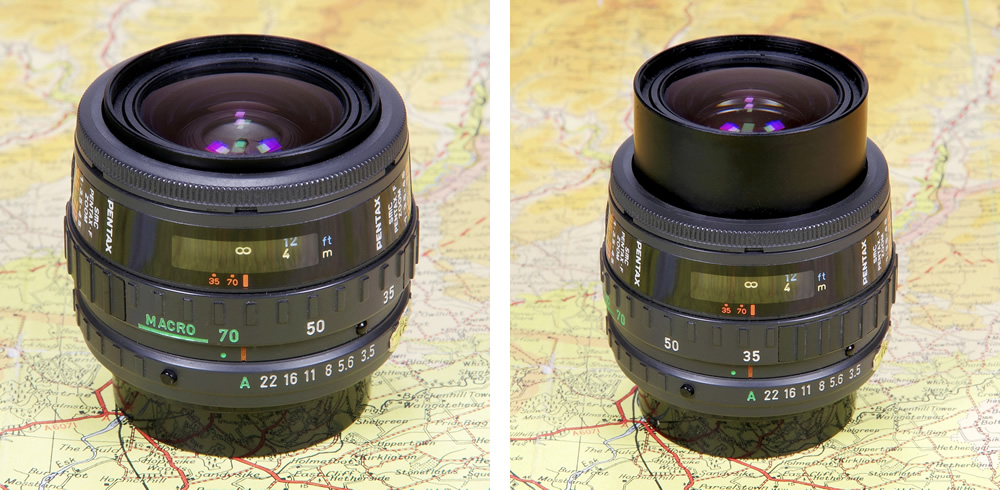
No hood was provided, so the review was undertaken without. If one can be sourced the dedicated hood is 49mm RH-RA. There is a standard 49mm filter thread. The lens is tiny, measuring just 67.0mm x 50.0mm and weighing in at a featherweight 235g.
There is a very slim manual focus ring, but no QuickShift, so the AF/MF switch on the camera must be used to engage manual focus. The focusing ring is not as slack as many AF lenses can be; it has just the right amount of resistance to be comfortably usable.
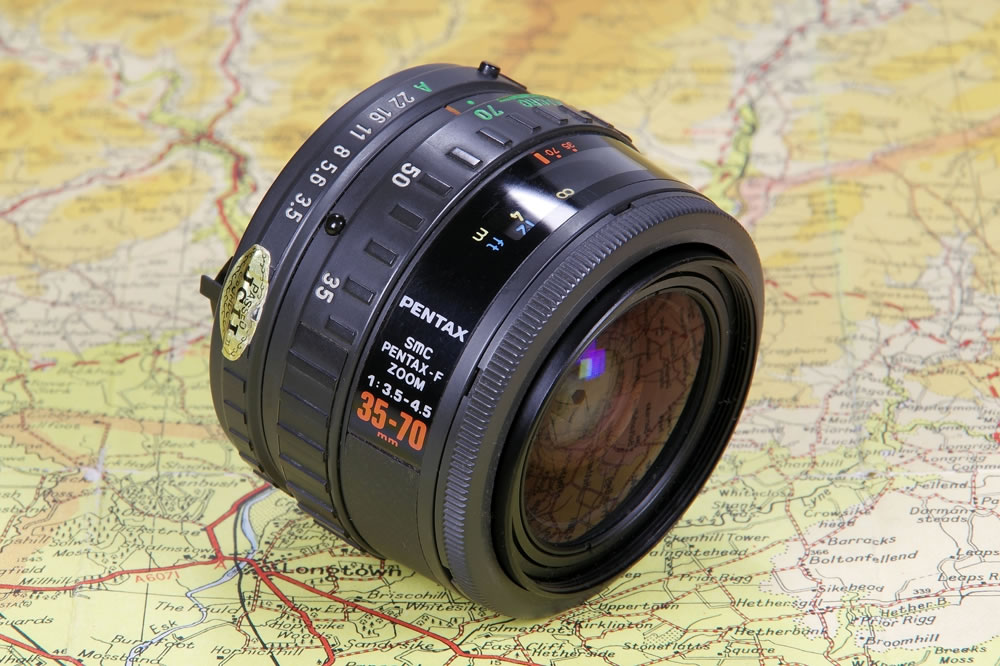
There is a fairly wide section behind the ring that contains the lens details, printed onto the same piece of clear plastic that also covers the distance scale. No depth of field scale is provided, but two red markers are there to indicate the change in focusing position for Infra Red photography at 35mm and 70mm. F series lenses have the actual focal lengths marked with distinctive red lettering.
The zoom ring is plastic and has two ranges for focusing. The main 35-70mm scale is marked in white numbers, with green for the 70mm setting and then, beyond a firm click stop, a green section marked as Macro. This means that the focusing is not continuous but is split. The closest macro focus distance is a very useful 32cm, giving a maximum magnification of 1:4, or 0.25x. Unfortunately, the changeover point does create an inconvenient split that can be just at the point required, neither one thing nor the other and somewhat annoying. The FA series does away with this style, moving on to continuous focusing from infinity to the closest point. The AF is screw drive, so a camera body with built in motor is necessary for AF, but there is not much for the AF to drive so focus is quick, decisive and not too noisy.
For those who enjoy the gorgeous etched figures of the M series lenses, the plastic construction of the F lens with its pressed out markings does not give the same level of tactile satisfaction. It is of course still perfectly functional.
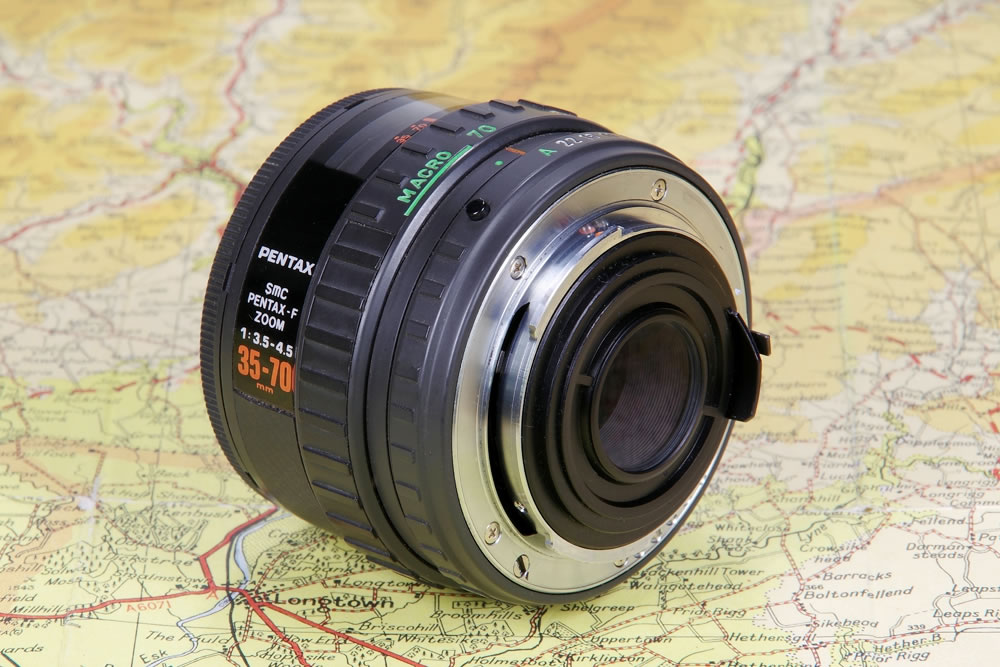
Optical construction is relatively simple by current standards, being just 8 elements in 8 groups. The diaphragm comprises 6 blades, again very simple compared with current design fashion.
There is a plastic aperture ring, with an A setting accessed by pressing a small button in the usual way. We then move on to the things we have become used to and which are not there. There is no weather resistance, so due care should be taken in poor weather. Having said that, the lens seems quite tightly made, so with care this need not be too much of a drawback. The lens does need to be shielded against the rain. There is no QuickShift, so it's AF or MF as selected, but no MF adjustments whilst the AF system is active.
One huge Pentax advantage is that the SR system is built into the camera, so the usual advantages of this still apply.
Considering the awkwardness of the focusing ranges and the lack of many features that we have become used to, the advantages of this lens fall on its low cost, its compact nature and whatever optical qualities it brings to the table. So let's see what it can do in terms of performance.
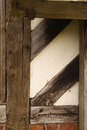
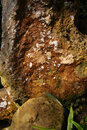
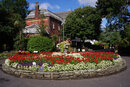
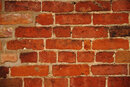
SMC PENTAX-F 35-70mm f/3.5-4.5 Sample Photos





































Performance
At 35mm, central sharpness is very good from f/3.5 to f/5.6, excellent at f/8 and f/11 and very good at f/16 and f/22. The edges do not fare so well, being only fair at f/3.5 and f/4, but then good at f/5.6 and f/8, very good at f/11 and f/16 and good at f/22.
At 50mm, central sharpness is very good from f/4 to f/16 and good at f/22 and f/29. The edges are soft at f/4, good at f/5.6, very good from f/8 to f/16 and just fair at f/22 and f/29.
At 70mm, central sharpness is fair at f/4.5, very good from f/5.6 to f/16, good at f/22 and fair at f/32. The edges are soft at f/4.5, good at f/5.6, very good at f/8 and f/11, good at f/16 and fair at f/22 and f/32.
SMC PENTAX-F 35-70mm f/3.5-4.5 MTF Charts
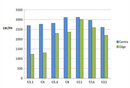
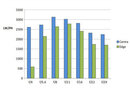
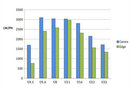
Overall, the central sharpness is of a high order and looks great. The edges can be equally sharp, depending on focal length and aperture, but generally need stopping down to f/8 or f/11 to achieve this. Soft edge performance at some apertures can of course be used creatively as well, so the lens has potential for experimentation. Macro distances yield equally sharp results.
CA (Chromatic Aberration) is well controlled centrally. The edges are allowed to drift somewhat, although the basic result is not dissimilar to even current wide angle zooms in the Pentax range. Software correction may be needed, depending on the subject matter and whether or not fringing tends to show up.
SMC PENTAX-F 35-70mm f/3.5-4.5 Chromatic Aberration Charts
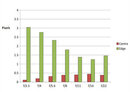
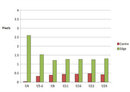
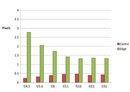
Distortion measures obvious barrel of -3.73% at 35mm, a rectilinear +0.02% pincushion at 50mm and a modest +1.23% pincushion at 70mm.
Bokeh is the smoothness of gradation in the out of focus areas in an image. When this lens was current 6 blades to the diaphragm was quite the norm, and no real notice was made regarding bokeh. The sharp edges of the diaphragm blades can be clearly seen in highlights in images and the bokeh in the normal range is not relaxed. It is slightly busy, not excessively so, but clearly not the raison d'etre of this lens. Interestingly, the bokeh in the macro range is much smoother and quite attractive.
SMC PENTAX-F 35-70mm f/3.5-4.5 Aperture Range









Even without the benefits of a hood, flare resistance is very good. The simple 8/8 optical configuration no doubt helps with this, plus of course the excellent SMC coating.
Vignetting is also very satisfactory, especially considering the tiny dimensions of the lens.
| Aperture | 35mm | 50mm | 70mm |
|---|---|---|---|
| f/3.5 | -1.6 | ||
| f/4 | -1.5 | -1.1 | |
| f/4.5 | -1.4 | ||
| f/5.6 | -1.4 | -0.8 | -1.3 |
| f/8 | -1.3 | -0.8 | -1.3 |
| f/11 | -1.3 | -0.8 | -1.1 |
| f/16 | -1.3 | -0.8 | -1.1 |
| f/22 | -1 | -0.8 | -1.1 |
| f/29 | -0.8 | ||
| f/32 | -1 |
Value for Money
The SMC Pentax-F 35-70mmmm f/3.5-4.5 Zoom lens is not expensive. The review sample was free, and with a bit of luck almost any low price could be found. The lens is not one of the currently fashionable choices.
There were no choices to be found on MPB, but eBay found a small number around the £20 mark, in one case including a working camera body. So certainly fantastic value for money, a lens that is not in fashion but there for the taking at a very small price.
Verdict
This is a mixed bag of performance, capable of nicely crisp images but equally well somewhat weak at the edges in large parts of its range. It is also a mixed bag in terms of handling, with a slightly clunky crossover point between the standard focusing range and the macro range. Depending on the photographer and the type of images being routinely undertaken this may or may not be an inconvenience. Also, no WR, no QuickShift, but it's not all negatives with the svelte form factor and the price approaching nil.
We might love this lens for its quirky image quality or we might hate it for its inconvenience and soft edges, but at the price level it isn't much of an imposition to try it out for ourselves and find out. There is definitely not much to lose.
Pros
- Sharp results are possible
- Low flare
- Fast, accurate AF
- CA well controlled
- Magnification 1:4 in macro
- Very low prices
Cons
- No weather resistance
- No QuickShift
- Split standard/macro focus ranges
- Distortion at 35mm
- Soft edges
Specifications: SMC PENTAX-F 35-70mm f/3.5-4.5 |
||||
| General | ||||
| Focal Type | Standard zoom | |||
| Lens Mounts | Pentax K SMC-F | |||
| Availability | ||||
| Year announced | 1987 | |||
| Discontinued | Yes | |||
| Dimensions | ||||
| Diameter | 67mm | |||
| Height | 50mm | |||
| Weight | 235g | |||
| Construction | ||||
| Groups | 8 | |||
| Elements | 8 | |||
| Blades | 6 | |||
| Lens | ||||
| Stabilised | No | |||
| Filter Size | 49mm | |||
| Min Aperture | f/22 | |||
| Max Aperture | f/4.5 - 3.5 | |||
| Angle of View | 64 - 35° | |||
| Focal Length | 35 - 70mm | |||
| Focusing | ||||
| Macro | No | |||
| Min Focus | 32cm | |||
| Focusing Type | Automatic | |||

There were made initially in Japan and then in Vietnam. Some people say the first version is better.


Hope that helps!
All the images are straight out of camera JPEG capture. I might make a slight tweak in Levels but not often. The images are all unsharpened, so adding a bit of Unsharp Mask will make them crisper.
Hope that helps!
Add Comment
To leave a comment - Log in to Pentax User or create a new account.


1669 posts
20 years