What is a Pro Camera?!

Posted 29/05/2006 - 22:10
Link
I'm afraid I have to agree that your arguments Ofutter are the thinly disguised 'us and them' attitudes that permeate through art colleges about what makes fine art and who can and should appreciate it.
You seem to have accepted that in order to become a great and renowned photographer you must follow a path defined by strict rules. Also that these can be taught to anyone who acquires the 'necessary and regulated' tools for the job and does not stray from the teachings, that although allowing some degree of innovation, must stick to what is deemed as OK by 'those that know and guide us'.
If your argument were correct that the best images are produced by the best available equipment, then surely all the painters and sculptors now going through college would soon be turning out masterpieces far greater than Michaelangelo, Rafael, Da Vinci etc.... as they did not have the tools at their disposal that todays students have e.g. brushes, paints, computer modelling etc...
Yes, you need the tools to do the job, but it's the true craftsman's ability that really matters and give a perfectly tuned Steinway piano to a tone deaf musician and he will not improve one iota.
Philip
You seem to have accepted that in order to become a great and renowned photographer you must follow a path defined by strict rules. Also that these can be taught to anyone who acquires the 'necessary and regulated' tools for the job and does not stray from the teachings, that although allowing some degree of innovation, must stick to what is deemed as OK by 'those that know and guide us'.
If your argument were correct that the best images are produced by the best available equipment, then surely all the painters and sculptors now going through college would soon be turning out masterpieces far greater than Michaelangelo, Rafael, Da Vinci etc.... as they did not have the tools at their disposal that todays students have e.g. brushes, paints, computer modelling etc...
Yes, you need the tools to do the job, but it's the true craftsman's ability that really matters and give a perfectly tuned Steinway piano to a tone deaf musician and he will not improve one iota.
Philip
Posted 30/05/2006 - 08:14
Link
i have sold my 6x7 camera as people just dont want medium fromat stuff these days
as more people switch to digital the pro labs are starting to do the same and as a conciuquence the price for having medium format proceed and printed is on the increase
the problem you now find is in order to compete in the photographic market place you have to be competetive this is why i have switched from medium format to digital i will of course still use 35mm as it is still cheaper to have 35mm printed than digital for the moment at least
you do find that most press photographer use digital these days for the majority not by choice but with the ever increasing global market place and the need to be first digital is easier to send from a wireless laptop
as more people switch to digital the pro labs are starting to do the same and as a conciuquence the price for having medium format proceed and printed is on the increase
the problem you now find is in order to compete in the photographic market place you have to be competetive this is why i have switched from medium format to digital i will of course still use 35mm as it is still cheaper to have 35mm printed than digital for the moment at least
you do find that most press photographer use digital these days for the majority not by choice but with the ever increasing global market place and the need to be first digital is easier to send from a wireless laptop

Posted 30/05/2006 - 08:26
Link
I read an artical recently about an award winning photo journalist (can't rember his name off hand) who travels the world with nothing more elaborate than Olympus compacts......say's it all I think.....it's not the camera thats "PRO" its the talent behind it.
Cheers
Brian.
LBA is good for you, a Lens a day helps you work, rest and play.
Brian.
LBA is good for you, a Lens a day helps you work, rest and play.

Posted 30/05/2006 - 08:28
Link
For these commercial applications, this world of ours is all about speed, so the choice is inevitable.
I recently did an article for PU "Images of England" where the source material was colour negative film, and after all the work I've done on digital cameras I just hated the messing about with scanning negatives. I didn't like the results as much either - the pictures don't have that clean-cut look that digital capture has. They looked fine on the printed page, but they were a real nuiscance to prepare.
It was with a sigh of relief that I went back to my totally digital files!
I recently did an article for PU "Images of England" where the source material was colour negative film, and after all the work I've done on digital cameras I just hated the messing about with scanning negatives. I didn't like the results as much either - the pictures don't have that clean-cut look that digital capture has. They looked fine on the printed page, but they were a real nuiscance to prepare.
It was with a sigh of relief that I went back to my totally digital files!
Best regards, John

Posted 30/05/2006 - 09:09
Link
In my book a professional is someone who earns more than 50% of their income from photography.
And therefore a pro camera is a camera used by such a person
Exactly what that camera is depends on their needs and their chosen segment of photography. Stipulating that they "must" have camera X or Y or Z is complete nonsense - because as has been said it is mostly down to the photographer.
Matt
And therefore a pro camera is a camera used by such a person
Exactly what that camera is depends on their needs and their chosen segment of photography. Stipulating that they "must" have camera X or Y or Z is complete nonsense - because as has been said it is mostly down to the photographer.
Matt
Posted 30/05/2006 - 14:19
Link
To return to the original question, if you make a living from your photography then that is your profession and the camera used can be described as professional.
A local photographer that visits schools in our area - to take those over-priced pics. that you feel obliged to buy despite the fact that you've already got more decent photos of your kids than you can shake a big stick at, uses nothing more sophisticated than an Olympus OM10 with a bracket mounted flash (always looks impressive to the untrained eye!).
To be fair, the images are perfectly adequate, serve their purpose and make the guy a living so in this case, the OM10 is a professional camera.
Pro-spec. cameras, of whatever format, are traditionally designed for the rigours of field work, high volume usage, compatibility with studio setups etc. etc.
Many pro's would use a Polaroid instant camera, not for the end result but simply to assess the scene (always seemed strange to me that an experienced professional would need to do this) but digital and mobile computing has largely superceded this. Whatever back-up or 'test' model they choose can also be described as 'professional' and many well known pro's have endorsed products aimed at the amateur market.
A wise professional will purchase good quality, reliable equipment that gets the job done and not necessarily pay for features that are not needed (and that's something that should apply to us all!).
A local photographer that visits schools in our area - to take those over-priced pics. that you feel obliged to buy despite the fact that you've already got more decent photos of your kids than you can shake a big stick at, uses nothing more sophisticated than an Olympus OM10 with a bracket mounted flash (always looks impressive to the untrained eye!).
To be fair, the images are perfectly adequate, serve their purpose and make the guy a living so in this case, the OM10 is a professional camera.
Pro-spec. cameras, of whatever format, are traditionally designed for the rigours of field work, high volume usage, compatibility with studio setups etc. etc.
Many pro's would use a Polaroid instant camera, not for the end result but simply to assess the scene (always seemed strange to me that an experienced professional would need to do this) but digital and mobile computing has largely superceded this. Whatever back-up or 'test' model they choose can also be described as 'professional' and many well known pro's have endorsed products aimed at the amateur market.
A wise professional will purchase good quality, reliable equipment that gets the job done and not necessarily pay for features that are not needed (and that's something that should apply to us all!).
Die my dear doctor, that's the last thing I shall do!
Posted 30/05/2006 - 15:13
Link
Quote:
I read an artical recently about an award winning photo journalist (can't rember his name off hand) who travels the world with nothing more than eloborade than Olympus compacts......say's it all I think.....it's not the camera thats "PRO" its the talent behind it.
I read the same article, I guess is this one:I read an artical recently about an award winning photo journalist (can't rember his name off hand) who travels the world with nothing more than eloborade than Olympus compacts......say's it all I think.....it's not the camera thats "PRO" its the talent behind it.
http://www.robgalbraith.com/bins/multi_page.asp?cid=7-6468-7844

Posted 30/05/2006 - 17:44
Link
Using a polaroid to 'pre-proof' a shot is actually not a bad idea. I for one have taken a shot only to find a lamppost or something similar sticking out of the top of someone's head. You know, the one that isn't there when you frame the shot, then it suddenly jumps into frame to cause maximum annoyance and completely destroys the pic. Yet in 2D on a piece of paper, its somehow much more obvious and most times leaps off of the page at you.
Peter E Smith - flickr Photostream
Posted 30/05/2006 - 18:48
Link
I know, even the pro's can trip up from time to time and it's having the foresight to use such techniques that distinguishes them from the rest of us.
Goes to prove my point though, that pro gear is whatever the pro uses and it needn't be the latest, greatest, most expensive kit available!
Goes to prove my point though, that pro gear is whatever the pro uses and it needn't be the latest, greatest, most expensive kit available!
Die my dear doctor, that's the last thing I shall do!
Posted 30/05/2006 - 18:48
Link
I know a photo-jounalist that travelled the world taking photos and writing articles for 3 years using a Fuji Finepix S602 (Zoom).
SO I consider him as a pro as it was his job.
He only recently upgraded due to the fact that he dropped his S602,(out of a helicopter)
SO I consider him as a pro as it was his job.
He only recently upgraded due to the fact that he dropped his S602,(out of a helicopter)
Posted 30/05/2006 - 19:01
Link
A flood of posts have come in response to my last post.
I think that people are getting too specific with my term 'Professional'.
Whilst it is true anyone who earns money from a camera could be classed as professional, however it seems incorrect to put a wedding photographer into the same category as Nick Knight, David Bailey or Sebastiao Salgado who also earn money from photography.
In response to G's comment that you can not notice the difference between a digital print and that of a traditional silver-based print would suggest to me that you have never done a fibre print before... or at least a decent one.
There is a reason why I and many others spend hours in the darkrooms, bleaching our hands and using harsh chemicals.
Secondly as I mentioned previously it is only when I am forced, I will resort to using digital manipulation within an fine art print and even then I will have a negative made from the file for me to traditionally print.
It is clear that by mentioning my ties to fine art I have been instantly stereotyped as a darkroom hermit refusing to go with the times. In-fact I use digital cameras, manipulation and prints more than I use silver based products. I reserve traditional methods for a photograph I actually care about and therefore want to produce the best print possible.
It is far from convenient but it is well worth it.
I think that people are getting too specific with my term 'Professional'.
Whilst it is true anyone who earns money from a camera could be classed as professional, however it seems incorrect to put a wedding photographer into the same category as Nick Knight, David Bailey or Sebastiao Salgado who also earn money from photography.
In response to G's comment that you can not notice the difference between a digital print and that of a traditional silver-based print would suggest to me that you have never done a fibre print before... or at least a decent one.
There is a reason why I and many others spend hours in the darkrooms, bleaching our hands and using harsh chemicals.
Secondly as I mentioned previously it is only when I am forced, I will resort to using digital manipulation within an fine art print and even then I will have a negative made from the file for me to traditionally print.
It is clear that by mentioning my ties to fine art I have been instantly stereotyped as a darkroom hermit refusing to go with the times. In-fact I use digital cameras, manipulation and prints more than I use silver based products. I reserve traditional methods for a photograph I actually care about and therefore want to produce the best print possible.
It is far from convenient but it is well worth it.
Posted 30/05/2006 - 20:12
Link
There are some digital printers who claim to be able to equal or even surpass the traditional darkroom print, and in some respects they may be right.
It does depend to some extent to the style and content of the photograph, but it is very easy comparatively to print different parts of a digital file to different exposures and contrasts and to incorporate other photographic elements from other images. Most of which, but not all, can be done in the darkroom, but with sometimes incredible difficulty.
Having said that, the finest black and white prints I have ever seen were 20" x 24" on fibre based paper, and they absolutely sang off the paper. Many digital photographers will have no idea of the sort of quality that is possible.
But for us mere mortals, whose darkroom skills are competent without maybe that extra dash of genius, the digital darkroom offers incredible possibilities that we can translate into better pictures.
The only problem really with this discussion is that we would need to see and feel the real life quality of the things we are discussing, and unfortunately this is not yet possible on the web.
It does depend to some extent to the style and content of the photograph, but it is very easy comparatively to print different parts of a digital file to different exposures and contrasts and to incorporate other photographic elements from other images. Most of which, but not all, can be done in the darkroom, but with sometimes incredible difficulty.
Having said that, the finest black and white prints I have ever seen were 20" x 24" on fibre based paper, and they absolutely sang off the paper. Many digital photographers will have no idea of the sort of quality that is possible.
But for us mere mortals, whose darkroom skills are competent without maybe that extra dash of genius, the digital darkroom offers incredible possibilities that we can translate into better pictures.
The only problem really with this discussion is that we would need to see and feel the real life quality of the things we are discussing, and unfortunately this is not yet possible on the web.
Best regards, John
Posted 31/05/2006 - 14:06
Link
the trouble is that these days labs be them high street or postal type labs all tend to use state of the art lazer printers these days check out the £133,000 fuji unit at your local jessops store
Posted 02/06/2006 - 09:46
Link
John I think what you are saying is very true about a printing. While digital printing has come a long way I do not believe digital files or in-fact digital prints contain anywhere near the same tonal range that can be represented with traditional printing.
As with all media and technology quality is always sacrificed for convenience!
With regards to the Jessops Fuji machine their main concern is to produce batch photograraphs at ultra high speed... they have no interest in quality but only to get as many printed as possible.
For those you that require a really good print from a digital file for any reason (exhibition etc) there is a very good lab in Covent Garden called Michael Dyer, who will do countless proof prints before the final to ensure everything is perfect. This is the same lab that will create a negative from a digital file.
As with all media and technology quality is always sacrificed for convenience!
With regards to the Jessops Fuji machine their main concern is to produce batch photograraphs at ultra high speed... they have no interest in quality but only to get as many printed as possible.
For those you that require a really good print from a digital file for any reason (exhibition etc) there is a very good lab in Covent Garden called Michael Dyer, who will do countless proof prints before the final to ensure everything is perfect. This is the same lab that will create a negative from a digital file.
Add Comment
To leave a comment - Log in to Pentax User or create a new account.


6213 posts
20 years
Winterpeg Manitoba Canada
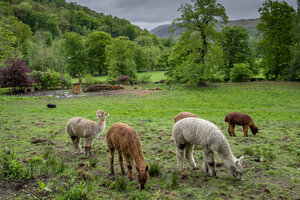
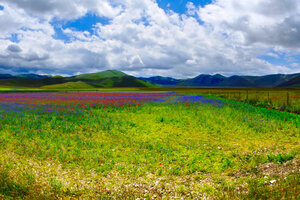
here's a sharp camera. with a sharp lens.
so lets call this one PRO and everything else Amature