In search of the lost village of Tyneham by John Riley.
Posted: 16/06/2025 - 10:55
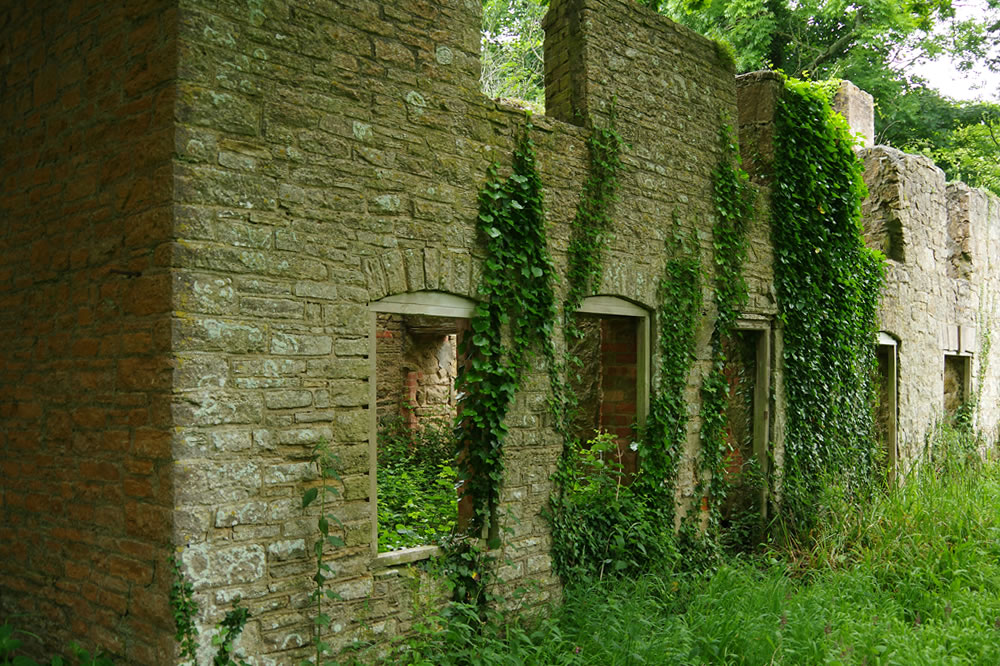
This mini-adventure has been a long time in the making, we needed to be in Dorset and also close enough to the area near to Corfe Castle to make the trip possible. The idea of visiting any lost or abandoned site has its own magnetic pull, and Tyneham is a special case, being both normally out of bounds and then sometimes accessible, courtesy of the Ministry of Defence and the status of the training of troops on the Lulworth Ranges. When the ranges are active, as in most of the year, we obey the notices and keep out. Most weekends access is possible and when the ranges close for a week, as they do from time to time, then access is available all week. Our trip was timed to co-incide with the May 2025 week long closure of the Ranges.
To check out if access is open, there is a page on the Government website that gives the details:
Lulworth range walks and Tyneham village access times 2025
The Story of Tyneham
Tyneham was mentioned as far back as the Domesday book, then called Tigeham. It was a small village, growing in rich, rolling hills not far from the coast and just a few miles from Corfe Castle. Long gone is the Big House, the Elizabethan mansion, demolished by the army in the 1950s. The village dates back much further than that, having been a part of the Roman Empire, and is famous for the discovery of an urn of round black "coins" made of black coal like material and dubbed the "Kimmeridge Coal Money". This can now be dispelled as a theory as the "coins" are seen to be the remants cut from decorative arm bands commonly made in the area, just like the centres of a Polo Mint, discarded...
The village was wealthy enough to support rows of cottages, the aforementioned mansion, a school room, a post office and a moderately sized church. It is also the site of one of the very first telephone boxes - saved and restored, accidentally destroyed by a film company and then restored again by the film company. Tyneham Farm was close to the village centre and a closely knit part of its economy and survival. Ordinary workers led probably hard lives, but good lives and were still surviving as a community well after the Geat War of 1914-1918. In these years the army took over land to the west of the village for training troops and practising with tanks. The sounds of ordnance could be heard in the rolling hills and low valleys.
The bombshell was issued in November 1943, with a curt message from the Army's Southern Command:
It is regretted, in the National Interest, it is necessary to move you from your homes....the date on which the military will take over this area is 19th December next, and all civilians must be out of the area by that date.....the Government appreciate that this is no small sacrifice which you are asked to make, but they are sure that you will give this extra help towards winning the war with a good heart.
Many assumed they would return, but there was no specific promise and it never happened. In 1973 the Nugent Committee decided that the Lulworth Ranges could be closed and the area returned to the previous inhabitants, but the new ranges that were planned for Wales were blocked by protests from other communities elsewhere so that never happened. The Ranges still resound with activity, but it was agreed that at most weekends when firing was suspended the public could have access and also in the occasional periods of inactivity.
The Where and the How
The location is close to Corfe Castle in Dorset, the postcode for SatNav being BH20 5NY. On non-firing days the village gate is open 09:00 to dusk. The exhibitions in the schoolroom and church are open 10:00 - 16:00. The roads to the village are narrow, mostly single track, but are now well signposted. There is a large car park, donations of £4.00 suggested, that is, if you can get online to pay. There is even Tyneham WiFi, but it proved very unstable on our visit. There are toilet facilities at the farm.
Of course, as photographers, the first debate is what kit do we take. This familiar dilemma is a battle between travelling light and travelling with every item of kit we own. The latter is now out of the question (too many lenses) and totally unnecessary. For this village I managed very well with one Pentax K-3 III plus the SMC Pentax-DA 12-24mm f/4 and SMC Pentax-DA 18-135mm lenses. The wider lens was the most useful in the confined areas, particularly inside the buildings. I took no tripod, relying on the SR system and on resting the camera on any available surfaces. ISO 400 covered most locations, increasing this to whatever was necessary. All the images were shot in JPEG at the best possible quality and white balance was set at Daylight, or AWB for some interior situations.
Tyneham Today
Tyneham is no longer a secret and the size of the car park shows that large numbers of cars are expected. At busy times there is even a trailer offering excellent coffee and some snacks, although it is well removed from the line of sight of the village itself. This all equates to lage numbers of people, but to be fair they soom disappear in the sprawling site and many never get beyond the farm and Post Office Row. In other words, there is calm and peace to be had, but the ghosts of the past have long gone.
Most of the village cottages are ruins, but the schoolhouse and the church are fully restored and maintained by the Army. These contain some heart-wrenching moments, with the childrens' names still marked under the clothes pegs and their work still resting on their desks. The decaying piano is still there, the books on the shelves, and if you are looking for ghosts then the visitors can be merged into the fabric by the use of slow shutter speeds.
The farmhouse has gone, but the barns around the courtyard are still intact, the largest housing the stage for the Tyneham Theatre. What a venue this must be when shows are presented. The past is well represented in books and websites, but the present is as enthralling as it promised to be. The photographer in me could be enjoying the sad remains of the once magnificent Rectory one moment, or waxing lyrical about the photogenic remains of the old Fordson tractor the next. Something for most of us and hopefully the images that accompany this article will give a feel for what is there to be experienced.
Tyneham


Add Comment
To leave a comment - Log in to Pentax User or create a new account.




258 posts
7 years
York.