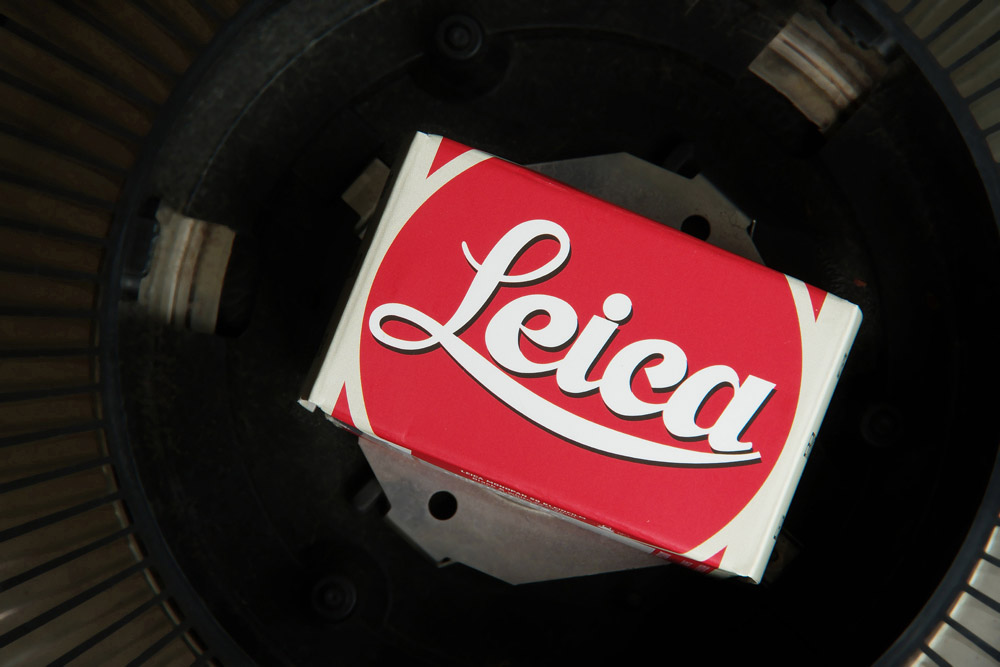
John Riley reviews the new Leica Monopan 50 black and white film which was announced in June 2025. Leica's Monopan 50 is in classic 35mm cassette form and is capable of 36 exposures.
Posted: 17/09/2025 - 11:15
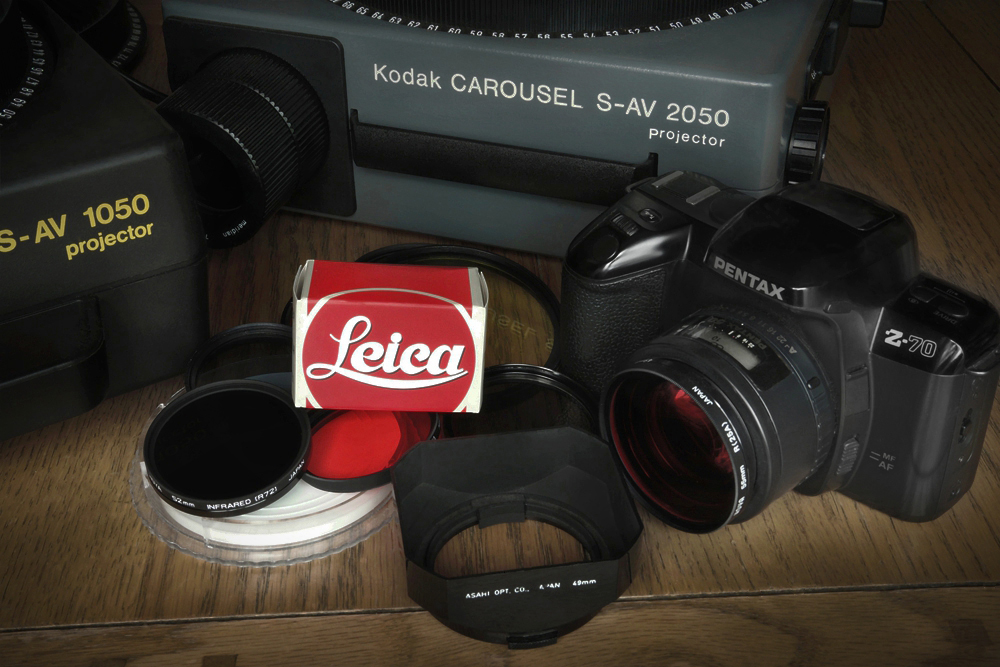
Despite the universal and immediate appeal of digital photography, film has remained actively in the background, the realm of a select few officianados. There is no doubt that film gives a different type of image to digital, a result of its different basic structure, but the disadvantage of a lack of immediate results is a difficult barrier in a world of sound bytes at speed. Against these odds, film has been enjoying a resurgence, helped along with the emergence of new film cameras from Pentax, Rollei and others. The latest step is this exciting new film from Leica, Monopan 50, an ultra fine grain black and white emulsion with extended panchromatic sensitivity. How does it fit into current photography needs? What do the results look like? Does it offer something special even to digital photographers? Read on...
The Technical Details
Monopan 50 is supplied in 36-exposure 35mm cassettes and is marked "open in subdued light", which, given its sensitivity to infra-red wavelengths is sound advice. Original IR film had to be opened in total darkness, as there was no anti-halation layer and light would pipe along the film itself, causing fogging. The new Leica film does have an anti-halation layer, which is a dark layer at the film base to prevent light reflecting back from the camera pressure plate into the film and reducing sharpness and fogging. It is not primarily marketed as an IR film however, but is something new.
Film sensitivity falls generally into one of four main categories:
- Ordinary, or blue sensitive film is, as the name suggests, only sensitive to blue light and has a wavelength cut off point of around 520nm.
- Orthochromatic film extends the sensitivity to include green light, with a cut off around 580nm.
- Panchromatic film is sensitive to blue, green and red light up to around 650nm. This is the normal modern emulsion style and has been so since the 1950s.
- Infra-red film extends the sensitivity to around 950nm, well into the IR part of the spectrum. However, as it is also sensitive to visible light an IR filter is used to cut out all but IR light. The R72 filter cuts off wavelengths below 720nm and the more severe R95 filter cuts off wavelengths below 950nm. Both these filters will look black when held up to the light.
The new Leica Monopan 50 is sensitive to around 750nm, hence the description Super Panchromatic. The IR R72 filter is the one used in this review and this is the one most likely to be easily obtainable, made by Hoya and many other manufacturers. The extended sensitivity to IR is interesting, but this is a general purpose black and white film as well. It is also very slow, at ISO 50, and ultra-fine grain. So no changing ISO mid-roll as we can with digital cameras. Pixel peeping is one thing, but without shake reduction and without any ISO alteration, it is likely that the potentially very high quality with even the largest prints will only be fully realised with the use of a solid tripod. This in itself could become quite seductive; a constant quest for the very highest sharpness levels. It sounds ideal for high quality exhibition prints.
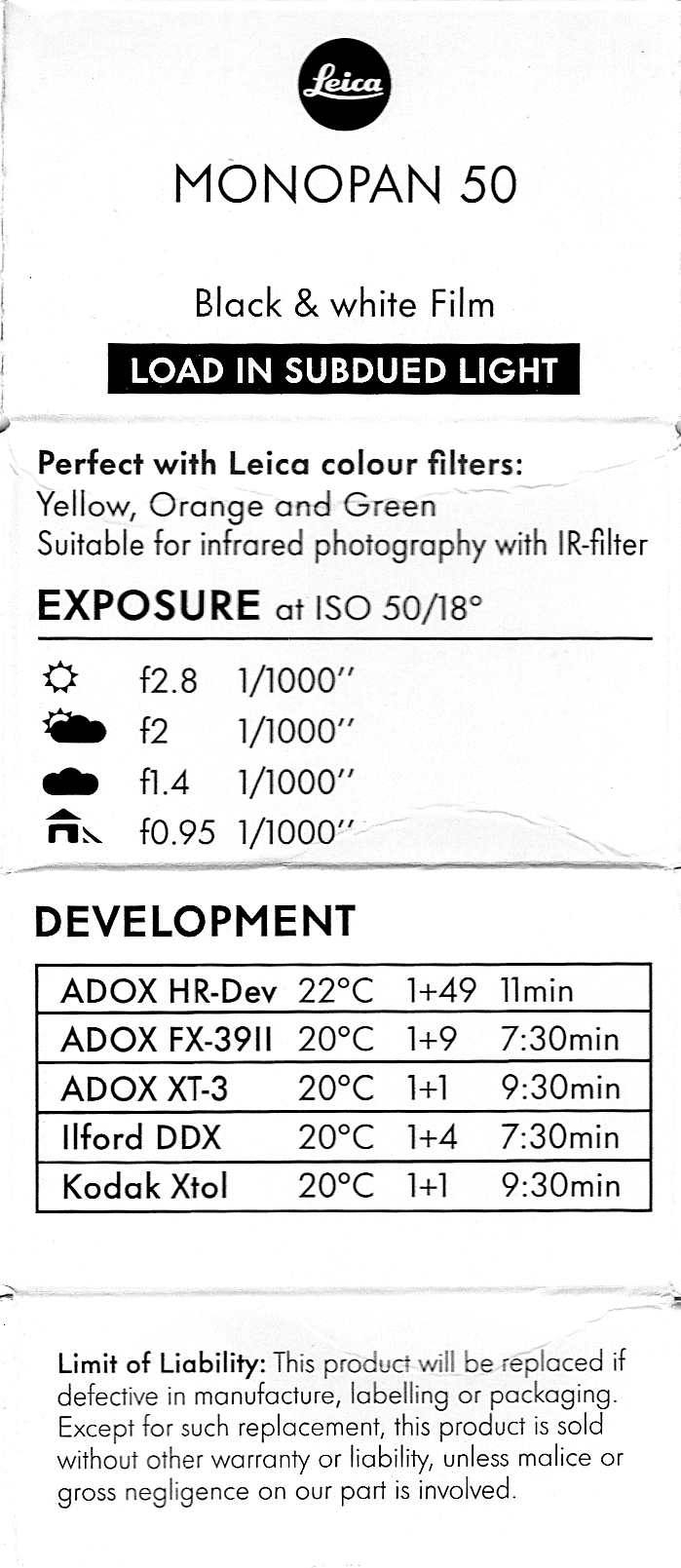
The interior of the box has the developer details, although any black and white developer could be used. It also has the exposure suggestions, a rather quaint idea now but one that has been inside many film boxes over many decades. It is also surprisingly accurate, although most of us will still take the advice of the camera's built in metering. This only breaks down if we are shooting IR as we have no way of knowing how much IR light is in a given scene.
We shall now have a look at the actual results, exploring also how the film responds when used with the usual colour filters. The camera chosen is the Pentax Z70, with the SMC Pentax-FA 50mm f/1.4 lens, an excellent performer.
The Results
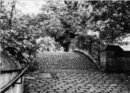
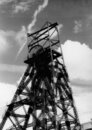
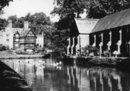
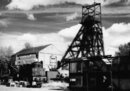
So that this review could be made and presented online, the processing and printing are of course analog but it all has to be translated into digital format. Within that limitation, the core is there of what the strengths of the film might be. The high contrast is something I personally can enjoy very much, aspiring perhaps to the quality of the images from photographers such as Sebastiao Salgado and Ansel Adams. The fine grain and sharpness are there. It is of course quite a slow film, so a tripod may well be needed to get the best out of it. The response to filters looks promising. The extended IR sensitivity looks very interesting and there is huge potential in exploring this.
The developing times quoted in the instructions are quite long and merit further investigation, also perhaps with other developers. This is just a glimpse of what might be possible, and is the reason that darkroom work can take many years to explore and fine tune. Film requires a hand on skill set that is quite different to digital photography and Leica Monopan 50 is definitely worth looking at as part of that learning curve.
Leica MONOPAN Sample Photos







Value for Money
The general feeling is that film is expensive, and compared with shooting thousands of digital mages at zero cost it is. Whether or not it is expensive compared to when we last used film in bulk depends. The Bank of England provides a useful inflation calculator, and links to more detailed analysis. The Leica film costs £10 per roll. When we last bought film, in packs of 10 to reduce the cost, the price per roll was £1.66 (1984 price). On the face of it the price now should be £5.43, but if account is taken of income values then the price now would be £9.33. If account is taken as a share of our economic activity then that becomes £11.41. This leaves us with a how long is a piece of string question, but overall perhaps £10 per roll is not actually too bad. Compared with the current price of other films it is about par for the course, with my own favourite Kodak Tri-X being rather more expensive. Leica Monopan 50 seems fairly priced.
The main cost will be in the processing, certainly if commercial labs need to be used. I used DSCL in Manchester and processing, printing to 7” x 5” and scanning cost £24.00. Negatives and prints are returned via shipping of our choice and the scans arrive using WeTransfer.
Verdict
The first impression is that the film is very contrasty, but it does record the highlights properly and gives a deep, rich look to images. It may not come across as well in the digital examples as the whole point of film is the classic look of a fine print. Response to using filters is what might be expected, but given the high contrast it may be that a red filter is a step too far. The instructions advise us that the film responds well to yellow, green and orange filters. The exception will be the IR72 infra-red filter, which gives yet another variation on the look of an IR image. Kodak High Speed IR film is very grainy, using digital cameras to make an IR image is much sharper and grain (noise) free; using the new Leica Monopan 50 is something else again.
It is moments like this when I feel the need for my darkroom, but alas that was decommissioned many years ago. To get the best out of Monopan 50 we need control of the developing, as different developers will alter the look of the negatives. We need the craft of a hand made silver print and then we are getting to grips with the possibilities.
This is very different territory to the digital world be inhabit, and scanning and digitising the results is not the primary advantage here. It is fine for quick sharing, but for the proper filmic experience Leica Monopan 50 deserves large, hand made exhibition prints and a luscious quality level that sings.
Pros
- Ultra fine grain
- Extended panchromatic sensitivity
- Fair cost
- Creative possibilities for large exhibition prints
Cons
- Slow film speed
- Processing costs
Add Comment
To leave a comment - Log in to Pentax User or create a new account.