The Pentax *ist series sees the transition between film and digital Pentax cameras, bringing us into a new era of photography. John Riley researches this pivitol moment in camera history.
Posted: 19/05/2025 - 17:19
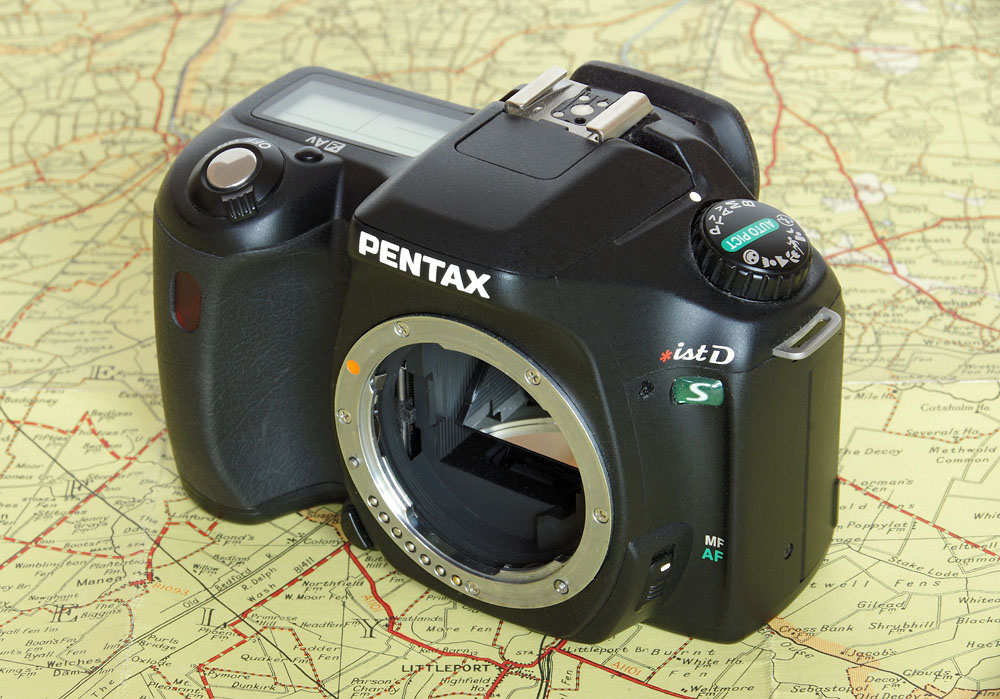
The last and the first, or perhaps The King is Dead, Long Live the King... as the last Pentax film SLR faded from the marketplace, we heralded the arrival of the first digital SLR.
This was clearly a difficult time for camera manufacturers, as a huge amount of R&D and investment was needed to bring the DSLR to the marketplace. I was first offered a Canon digital camera at an exhibition, a compact model with barely 480 pixels across the frame to its name. The cost was a whopping £30,000 and I did not take it up. However, that was no doubt a necessary stepping stone and things moved on quickly to more realistic levels.
But we digress, as the last film camera, following on from the MZ series, was the strangely named *ist of 2003. New concepts came with the camera, such as the FA-J lenses without an aperture ring, and it had a good level of specification. It was let down by unusually poor finishing and its overly plastic construction and feel. It was not as cheap in actual money as it felt. However, disappointing it might have been but just around the corner were some much better surprises.
The DSLRs started off with prototypes that utilised the same full frame sensor as the ill-fated Contax. It soon became apparent that full frame sensors were too difficult to produce in bulk and the cost was too high, so the APS-C format was born. Along with this, the appropriate lenses were smaller, but the 1.5x crop factor meant that "35mm equivalent" focal lengths were extended and wide angle coverage was lacking in the range. The sensors also needed telecentric design in the lenses, where the exit light rays were parallel, so the light could fall unimpeded into the small pits that enclosed each pixel on the sensor surface. Film lenses, especially wide angles, were not generally telecentric and the light rays would hit the pixels (at the frame edges in particular) at slanted angles, causing chromatic aberration. Standard to telephoto lenses were much better in this respect, but wide angles needed revamping and this took time.
The use of the term "35mm equivalent" is somewhat contentious if looked at too closely, but in essence it is trying to produce an understandable reference that describes the field of view on any format of sensor, regardless of its size, in terms of what it would be equivalent to on the standard 35mm format SLR frame. As such, it is workable and conveys some basic and useful information. So, for example, a 50mm lens on an APS-C format DSLR has a field of view similar to having a 75mm lens on a "full frame" or "35mm format" camera. Therefore, we know and easily undertstand that a standard lens on a full frame camera becomes a short telephoto on a crop sensor. Of course, a 50mm lens remains and always will be a 50mm lens, so as with much in photography, so there are other factors involving depth of field. This is an added complication that we can return to in full detail perhaps in another article, but for the simple purposes of understanding the field of view of a lens the crop factor will serve well enough.
The K Mount
Let's repeat some notes about the K mount. There are a number of different levels of complexity as the original 1975 K mount was adapted to the electronic era, and then to AF lenses. The degree of compatibility is extraordinary, and as previously noted remains a tribute to the original sterling work done on the mount design, a co-operation between Pentax and Zeiss.
| The K Mount | |
| Screw Mount | Lenses can be used on K mount Bayonet cameras via the Pentax Adapter K. There are no electronic contacts and everything is manual. Infinity focus is maintained. |
|---|---|
| K Mount | The original plain mount with no electronic contacts. Lenses are the original K (SMC Pentax) series and the later smaller M (SMC Pentax-M) series. |
| KA Mount | Adds electronic contacts which conveys basic lens information. The lenses were SMC Pentax-A. |
| KAF Mount | Adds the AF coupler as well as the lens information contacts and the original cameras were the SF series, the lenses being labelled SMC Pentax-F. |
| KAF2 Mount | Adds Power Zoom contacts within the lens throat. More information is also being exchanged with the lens, for example MTF information so optimum apertures can be known. |
This completes the changes to the film cameras, with the exception of the *ist that we will get to later in this series of articles. Each mount change up to KAF2 adds electronic information but does not change mechanical connection, so all previous lenses can still be fully used without resorting to stop down manual operation. At this point there are no exceptions, and even screw mount lenses can be used via their adapter on the very latest film bodies.
The *ist and the DSLRs all have what has been called the "crippled" version of the KAF mount, without the aperture coupler. This means that lenses without an "A" setting on the aperture ring can only be used in stop down mode or at open aperture. At open aperture, Av will set the correct shutter speed, but the lenses cannot be stopped down. In Manual mode, using the green button to set exposure the lenses will stop down. It does work, but is obviously slower than using an A series or later lens with electronic contacts. Conversely, a lens such as an FA-J model will have no aperture ring and must therefore be used on an approriate camera to ensure use of all apertures is possible.
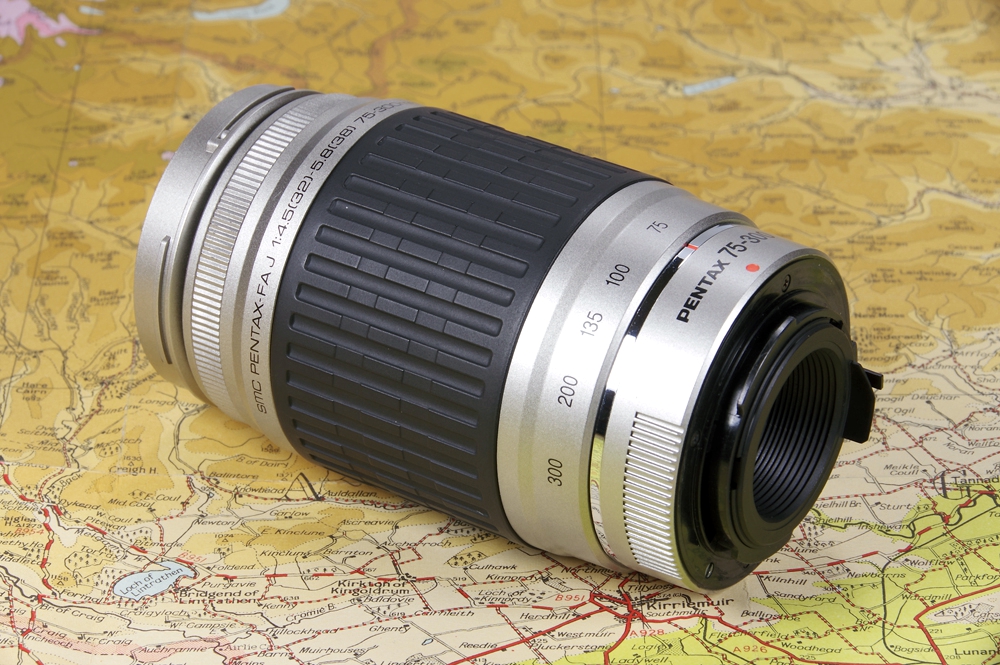
The lenses will be covered in a future article, but the digital models are labelled SMC Pentax-DA (or HD Pentax-DA) for a crop sensor lens and SMC Pentax-D FA (or HD Pentax-D FA) for a full frame lens.
The *ist Cameras
| Pentax *ist - 2003 - the last film SLR | |
| Format | full frame film |
|---|---|
| Sensor | 35mm film |
| EV | 0 to 21 |
| Shutter | 30-1/4000 |
| Frames Per Second | 2.5 |
| Weight | 335g without batteries |
| Light Path | Pentamirror |
The *ist certainly caught attention, but unfortunately mainly for its unusual name. What could it mean? Ideas came in thick and fast, from perhaps "perfection*ist" to "photojournal*ist" and we can all make up ideas...With the *ist came the FA-J lenses with no aperture ring, which broke the ice regarding this feature in preparation for the DSLR, which eventually swept film cameras away, Not immediately perhaps, but as specific lens ranges grew the inevitable soon gained traction.
| Pentax *ist D - 2003-2006 - the first Pentax DSLR | |
| Format | APS-C |
|---|---|
| Sensor | CCD, 6.1MP |
| EV | 1 to 21.5 |
| Shutter | 30-1/4000 |
| Frames Per Second | 2.6 |
| Weight | 550g without batteries |
| Light Path | Pentaprism |
| Equipment Gallery | PENTAX *ist D |
The *ist D was the first DSLR for Pentax, introduced around the £1500 mark and thus relatively expensive. Out of reach for many of us, but it paved the way and as sales grew other less expensive models emerged. Solid, reliable and very usable, but compared to modern DSLRs very slow in operation and with an agonisingly small rear screen. The *ist D is the only Pentax DSLR that uses CompactFlash cards. The standard kit lens was the SMC Pentax FAJ 18-35mm f/4-5.6 AL, actually a full frame lens that would have been found with the *ist film SLR.
| Pentax *ist DS - 2004-2005 - the first more affordable DSLR | |
| Format | APS-C |
|---|---|
| Sensor | CCD, 6.1MP |
| EV | 1 to 21.5 |
| Shutter | 30-1/4000 |
| Frames Per Second | 2.8 |
| Weight | 505g without batteries |
| Light Path | Pentaprism |
| Equipment Gallery | PENTAX *ist DS |
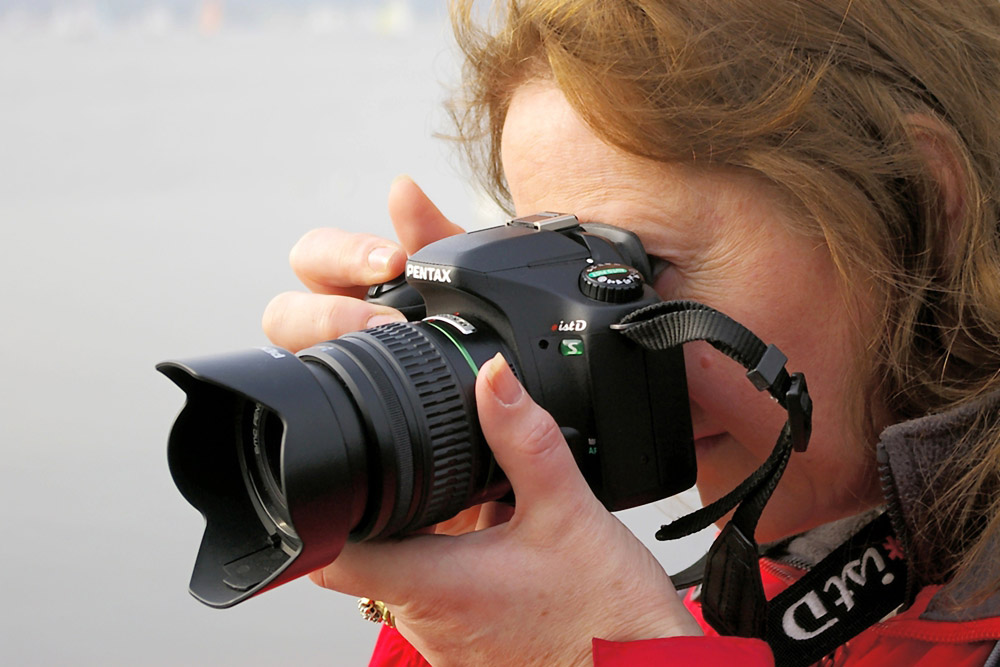
Now running out at a little under £1000, the *ist DS is probably the first "affordable" Pentax DSLR. It came equipped with its SMC Pentax-DA 18-35mm f/3.5-5.6 AL kit lens which managed to hold its head high above the generally lamentable standards of kit lenses from many other marques. The *ist DS marks the introduction of SD cards, uses AA batteries and is back to Pentax standards of finish. It is a compact and solid DSLR with excellent performance in the context of its day and the technology possible at that time. The Lithium batteries supplied with the camera had an amazing life, delivering possibly as many as 1300 exposures if flash was not used. Compared to current models its operation is very slow, but it is still capable of producing creditable results.
Pentax *ist DS Sample Photos

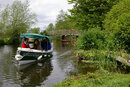


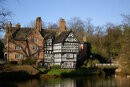


| Pentax *ist DS2 - 2005-2006 | |
| Format | APS-C |
|---|---|
| Sensor | CCD, 6.1MP |
| EV | 1 to 21.5 |
| Shutter | 30-1/4000 |
| Frames Per Second | 2.8 |
| Weight | 505g without batteries |
| Light Path | Pentaprism |
| Equipment Gallery | PENTAX *ist DS2 |
The *ist DS2 extended the tenure of the original with a few tweaks to the details. There is a slightly larger back screen (2" to 2.5") and expansion of the modes where AF-C works.
| Pentax *ist DL - 2005-2006 | |
| Format | APS-C |
|---|---|
| Sensor | CCD, 6.1MP |
| EV | 1 to 21.5 |
| Shutter | 30-1/4000 |
| Frames Per Second | 2.8 |
| Weight | 470g without batteries |
| Light Path | Pentamirror |
| Equipment Gallery | PENTAX *ist DL |
The *ist DL is a lower cost and lighter version of the *ist DS models, using a pentamirror instead of a glass pentaprism. Metering is also simplified.
| Pentax *ist DL2 - 2006 | |
| Format | APS-C |
|---|---|
| Sensor | CCD, 6.1MP |
| EV | 1 to 21.5 |
| Shutter | 30-1/4000 |
| Frames Per Second | 2.8 |
| Weight | 470g without batteries |
| Light Path | Pentamirror |
| Equipment Gallery | PENTAX *ist DL2 |
The final *ist D camera in this series, also a lower cost pentamirror camera, but with more focus points and other minor tweaks. This completes the first tranche of Pentax DSLRs.
Conclusions
The *ist DSLR range was a solid start for Pentax. The K mount was retained and backwards compatability, always a feature of Pentax, was remarkably good. All Pentax lenses can still be used, from the screw thread models onwards, although some are more convenient than others. CCD sensors are used, at this stage them being more viable than CMOS. The crop sensor meant that different focal lengths had to be utilised to take the crop factor into account. At this point there was no shake reduction, no weather resistance and the operation of the cameras was much slower than we are now used to. However, they are appealing, well made and are still usable. Image quality is absolutely good enough for web and for making moderately sized prints, perhaps up to A4 for best results.
At this time the discussions of film vs digital were still in full flow, and it is true that in terms of potential resolution film was the winner hands down. However, to be fair, we didn't tend to shoot Ilford Pan F (ISO 50) or Kodak Panatomic-X (ISO 32) and always use a tripod, being far more likely to be shooting hand held on Ilford FP4 (ISO 125) or, like myself, perhaps on Kodak Tri-X (ISO 400). Comparisons should be made with this in mind and this does close the gap considerably. Considering the convenience of digital and especially the ability to instantly review images shot, the power of digital was firmly in the ascendent.
Add Comment
To leave a comment - Log in to Pentax User or create a new account.