extension tubes

Posted 28/02/2008 - 21:26
Link
You really need that book!
Extension tubes fit between camera body and lens, which allows the lens to focus on objects that are very close.
The "front tubes" are lens hoods (or shades), that prevent glare.
G
Extension tubes fit between camera body and lens, which allows the lens to focus on objects that are very close.
The "front tubes" are lens hoods (or shades), that prevent glare.
G
Keywords: Charming, polite, and generally agreeable.

Posted 28/02/2008 - 22:03
Link
Quote:
You really need that book!
Extension tubes fit between camera body and lens, which allows the lens to focus on objects that are very close.
The "front tubes" are lens hoods (or shades), that prevent glare.
G
Thanks george...You really need that book!
Extension tubes fit between camera body and lens, which allows the lens to focus on objects that are very close.
The "front tubes" are lens hoods (or shades), that prevent glare.
G
I know i need the book.... , but still, is that not what a macro lens is for ????. The ext tubes seem cheap enough !!!!
K10 d-18-55mm
Tamron 70-300mm
The purpose of life is to live a life of purpose..
Tamron 70-300mm
The purpose of life is to live a life of purpose..
Posted 28/02/2008 - 22:36
Link
Quote:
I know i need the book.... , but still, is that not what a macro lens is for ????. The ext tubes seem cheap enough !!!!
Extension tubes make macro lenses for the poor. But of course, they are not as good as the real thing because real macro lenses tend to be extra sharp and to have a flat plane of focus.George Lazarette wrote:
You really need that book!
Extension tubes fit between camera body and lens, which allows the lens to focus on objects that are very close.
The "front tubes" are lens hoods (or shades), that prevent glare.
G
Thanks george...You really need that book!
Extension tubes fit between camera body and lens, which allows the lens to focus on objects that are very close.
The "front tubes" are lens hoods (or shades), that prevent glare.
G
I know i need the book.... , but still, is that not what a macro lens is for ????. The ext tubes seem cheap enough !!!!
G
Keywords: Charming, polite, and generally agreeable.

Posted 28/02/2008 - 22:37
Link
there are 4 ways of getting into macro photography (some of them can be combined for Uber-Macro)
1: Reverse a short prime. This is most commonly done with a ~50mm lens. It is the cheapest way of doing Macro if you already own a short prime lens. You get an adaptor ring which has a K mount on one side and a filter thread on the other, and litterally mount the lens backwards. With a high quality lens this can give very nice results but there is no focus adjustment and you have to use stop down metering.
2: Close up "filters". These are accessory lenses which screw onto your main lens like a filter. They come in various strengths and as usual you get what you pay for. If all you have is the kit zoom, this is the cheapest way into macro and with decent quality filters can produce decent results. Generally the results are not quite as good as other methods but a set can be handy for "just in case" macro. They work like a set of reading glasses for your camera, giving you closer minimum focus at the cost of not being able to focus to infinity.
3: Extension tubes. These go between the camera body and the lens. They contain no optics so will generally produce better results than close up filters, but new prices are expensive considering what they physically are. Second hand you can pick up a set for £15 or £20 and this makes them far more reasonable. The effect is broadly the same as the filters above, minimum focus gets closer but you loose infinity.
4: Macro Lens. This is the Rolls Royce solution. A dedicated macro lens is not a cheap piece of glass (although some excelent savings can be made by buying second hand), but most people who own one will tell you it's the sharpest lens they own. Certainly my Tamron SP 90mm has few equals in my kit bag for sheer resolution. A good macro lens will let you focus all the way from 1:1 macro to infinity and produce tack sharp images throughout the range.
As I said the methods can often be combined, a lot of people use a macro lens on extension tubes to get even closer for example. Macro lenses are very well suited to use on tubes because their optical designs are already optimised for maximum performance close in.
1: Reverse a short prime. This is most commonly done with a ~50mm lens. It is the cheapest way of doing Macro if you already own a short prime lens. You get an adaptor ring which has a K mount on one side and a filter thread on the other, and litterally mount the lens backwards. With a high quality lens this can give very nice results but there is no focus adjustment and you have to use stop down metering.
2: Close up "filters". These are accessory lenses which screw onto your main lens like a filter. They come in various strengths and as usual you get what you pay for. If all you have is the kit zoom, this is the cheapest way into macro and with decent quality filters can produce decent results. Generally the results are not quite as good as other methods but a set can be handy for "just in case" macro. They work like a set of reading glasses for your camera, giving you closer minimum focus at the cost of not being able to focus to infinity.
3: Extension tubes. These go between the camera body and the lens. They contain no optics so will generally produce better results than close up filters, but new prices are expensive considering what they physically are. Second hand you can pick up a set for £15 or £20 and this makes them far more reasonable. The effect is broadly the same as the filters above, minimum focus gets closer but you loose infinity.
4: Macro Lens. This is the Rolls Royce solution. A dedicated macro lens is not a cheap piece of glass (although some excelent savings can be made by buying second hand), but most people who own one will tell you it's the sharpest lens they own. Certainly my Tamron SP 90mm has few equals in my kit bag for sheer resolution. A good macro lens will let you focus all the way from 1:1 macro to infinity and produce tack sharp images throughout the range.
As I said the methods can often be combined, a lot of people use a macro lens on extension tubes to get even closer for example. Macro lenses are very well suited to use on tubes because their optical designs are already optimised for maximum performance close in.
you don't have to be mad to post here
but it does help
but it does help

Posted 28/02/2008 - 23:04
Link
Extension tubes are a great way of turning a lot of lenses into macro lenses. With a 50mm you can get really close, but the lens may shade the subject. 2 examples I took when trying my then new camera with my old kit.
Cosina 50mm with 65mm ext. tube kit:
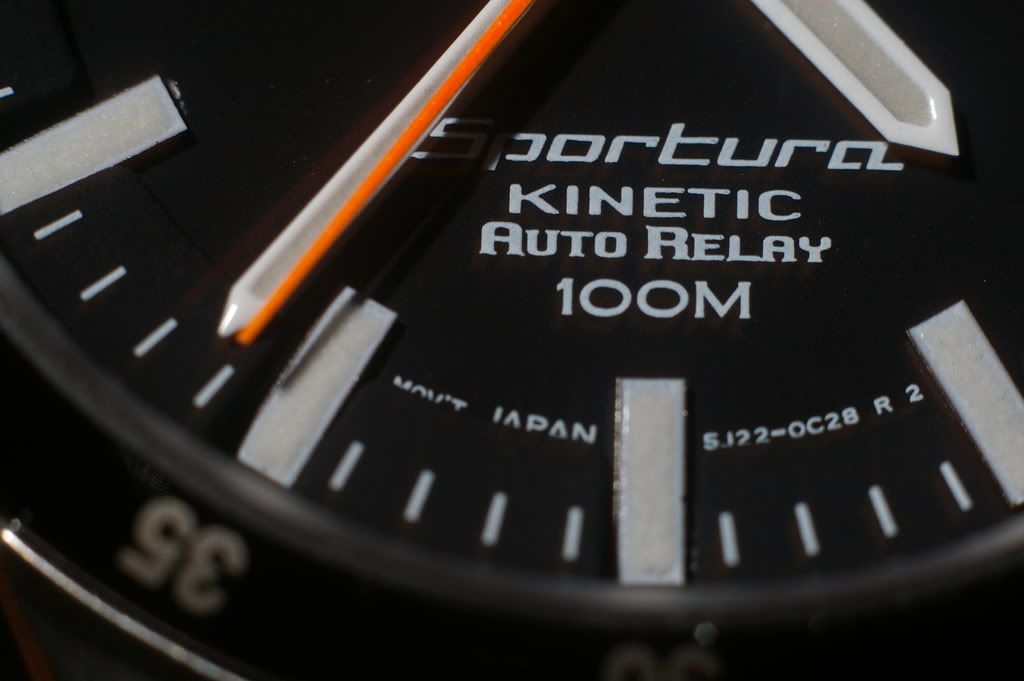
Cosina 165mm with 65mm ext. tube kit
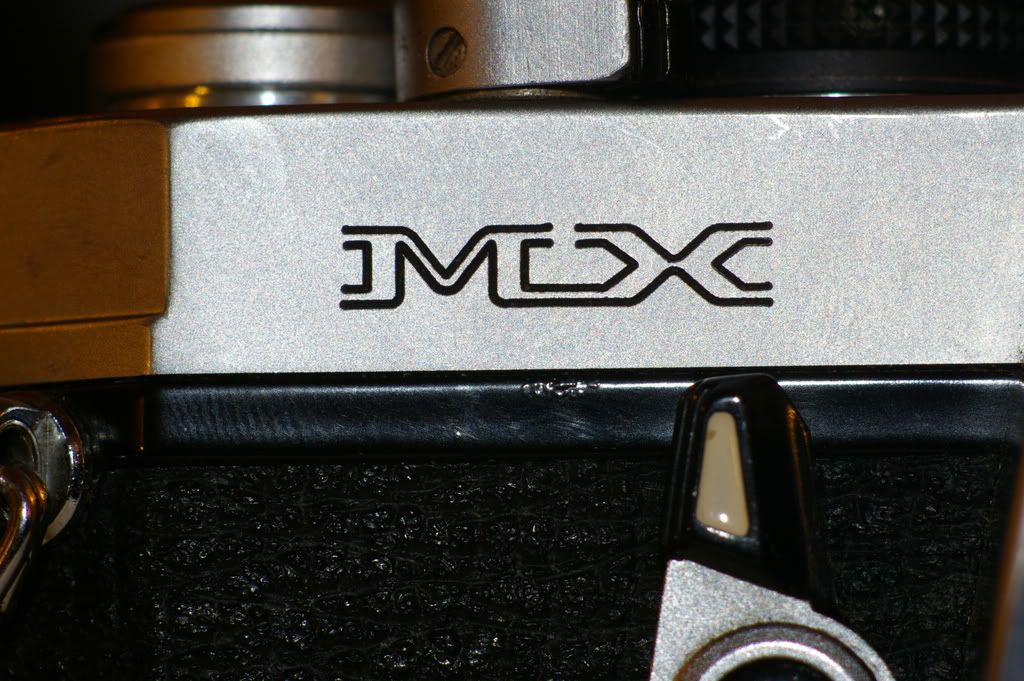
My little kit splits into three seperate tubes of 13mm 21mm 31mm which give 3 different amounts of magnification.
I bought them about 25 years ago and they were quite cheap.
I have just bought a Sigma 70mm macro which should arrive tomorrow, which I am hoping will be quicker and easier to use, but as for sharpness.....
Cosina 50mm with 65mm ext. tube kit:

Cosina 165mm with 65mm ext. tube kit

My little kit splits into three seperate tubes of 13mm 21mm 31mm which give 3 different amounts of magnification.
I bought them about 25 years ago and they were quite cheap.
I have just bought a Sigma 70mm macro which should arrive tomorrow, which I am hoping will be quicker and easier to use, but as for sharpness.....
K100D Super, 18-55, 50-200, Sigma 10-20, Sigma 70mm macro and lots of old lenses

Posted 28/02/2008 - 23:09
Link
Mongoose's summary is very good, but incomplete.
There is another method of producing macro images, and that is to stack two lenses together. If say you mount a 200mm lens (can be a zoom) on the camera, and reverse mount a 50mm lens in front of it, you get a combination which produces around a 4:1 magnification. Stacking rings are merely rings having 2 male filter threads enabling one lens to be reverse mounted on the front of another.
Ideally both lenses should have the same diameter filter thread, but it's not essential. Just ensure you can get an appropriate stacking ring.
PS: Mongoose mentioned that there is no focus adjustment on option one. To achieve focus, you need to move the camera and lens in relation to the subject.
There is another method of producing macro images, and that is to stack two lenses together. If say you mount a 200mm lens (can be a zoom) on the camera, and reverse mount a 50mm lens in front of it, you get a combination which produces around a 4:1 magnification. Stacking rings are merely rings having 2 male filter threads enabling one lens to be reverse mounted on the front of another.
Ideally both lenses should have the same diameter filter thread, but it's not essential. Just ensure you can get an appropriate stacking ring.
PS: Mongoose mentioned that there is no focus adjustment on option one. To achieve focus, you need to move the camera and lens in relation to the subject.
Peter E Smith - flickr Photostream

Posted 29/02/2008 - 00:06
Link
I don't know if any were made for PK mount, but I also have a bellows unit that I use alone or with tubes and reversing rings for screw mount macro.
The bellows allows adjusting for different lengths easily.
A million combinations and a ton o fun!
The bellows allows adjusting for different lengths easily.
A million combinations and a ton o fun!
Mac from Montreal
SP, SPII, SPF, PZ-10, P30, SFX, K110D, istDS, Optio 60, Z-10, H90, RZ10, I-10, f3.5 28mm, f1.8 55mm, f1.4 50mm, f3.5 135mm, f2.5 135mm, f4 50mm Macro, f4.5 80-200 F, f4 35-70, f3.5 28-80, f3.5 35-135, f3.5 18-55, f1.8 31mm Ltd., two Auto 110's, Auto 110 lenses and filters, tubes, bellows, Manfrottos and a sore back.
SP, SPII, SPF, PZ-10, P30, SFX, K110D, istDS, Optio 60, Z-10, H90, RZ10, I-10, f3.5 28mm, f1.8 55mm, f1.4 50mm, f3.5 135mm, f2.5 135mm, f4 50mm Macro, f4.5 80-200 F, f4 35-70, f3.5 28-80, f3.5 35-135, f3.5 18-55, f1.8 31mm Ltd., two Auto 110's, Auto 110 lenses and filters, tubes, bellows, Manfrottos and a sore back.
Posted 29/02/2008 - 00:11
Link
Quote:
My little kit splits into three seperate tubes of 13mm 21mm 31mm which give 3 different amounts of magnification.
Er, I make that seven.My little kit splits into three seperate tubes of 13mm 21mm 31mm which give 3 different amounts of magnification.
13 = 13
21 = 21
31 = 31
13+21 = 34
13+31 = 43
21+31 = 52
13+21+31 = 65
Impressive pics, by the way.
G
Keywords: Charming, polite, and generally agreeable.
Posted 29/02/2008 - 00:19
Link
OK, OK
K100D Super, 18-55, 50-200, Sigma 10-20, Sigma 70mm macro and lots of old lenses

Posted 29/02/2008 - 05:36
Link
Be aware that the cheapest extension tubes don't have any electrical contacts - so you have to use Manual mode and trial and error. Not a major problem with a digital camera.
~Pete
Posted 29/02/2008 - 10:17
Link
Quote:
I don't know if any were made for PK mount, but I also have a bellows unit that I use alone or with tubes and reversing rings for screw mount macro.
The ones made by BPM had interchangeable mounts, so you can keep an eye out for those which pop up on ebay now and again.I don't know if any were made for PK mount, but I also have a bellows unit that I use alone or with tubes and reversing rings for screw mount macro.
This was with my 50mm f/1.7 and bellows. Seed was about 5mm long.

Not the easiest thing to use with a moving subject though, extension tubes and/or a macro lens is definitely the way to go for general insect shots I reckon.
Dan
K-3, a macro lens and a DA*300mm...
Add Comment
To leave a comment - Log in to Pentax User or create a new account.




37 posts
18 years
Tamron 70-300mm
The purpose of life is to live a life of purpose..